What Pages Should a Plumbing Company Website Have?
A plumbing company website should have focused pages for emergency plumbing, drain cleaning, water heaters, leak repair, service areas, reviews, project proof, FAQs, and contact so local customers can trust the company and call fast.
The direct answer
A plumbing company website should have pages that match how customers actually look for help: homepage, emergency plumbing, drain cleaning, water heaters, leak repair, sewer or main line work if offered, commercial plumbing if relevant, service areas, reviews, project proof, FAQs, and contact. If every service is squeezed onto one generic page, the site is probably making local buyers work too hard.
For a Charlotte or NC plumber, the page structure should separate urgent calls from planned work. A homeowner with a burst pipe needs a faster path than someone comparing water heater replacement, drain cleaning, fixture installs, or annual maintenance. The website should make the service, area, proof, phone number, and next step obvious on mobile.
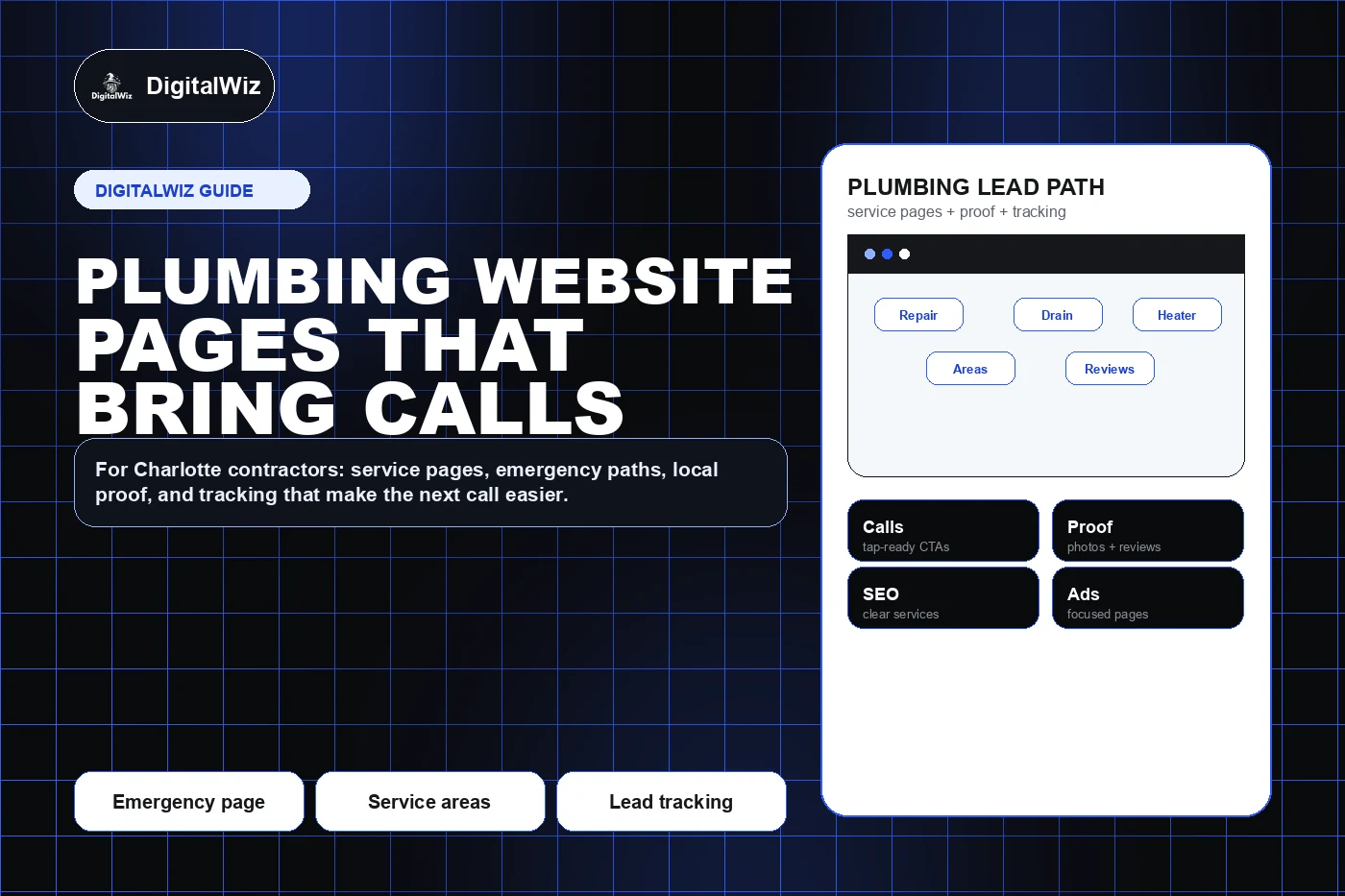
The DigitalWiz rule: build pages around real plumbing decisions, not menu filler. Your website, Search Visibility, and Paid Ads Management all work better when each page has a clear service, local proof, CTA, and tracking.
- Create focused pages for the plumbing services that create real revenue.
- Give emergency leads a fast call path without fake urgency or unsupported promises.
- Use real local proof: reviews, photos, process notes, credentials, and service-area details.
- Track calls, forms, booking clicks, landing pages, source, and lead quality.
Start with the money pages
The most important plumbing pages are the ones closest to revenue. For many companies, that means emergency plumbing, drain cleaning, water heater repair or replacement, leak detection or leak repair, sewer line help, fixture installs, repiping, and commercial plumbing when that is part of the business.
Each page should answer the buyer's immediate question: do you handle this problem, do you serve my area, can I trust you in my home or business, what happens next, and how do I call or request service? A thin services page with a list of every task rarely gives enough proof for search engines or customers.
This follows the same service-page-first strategy covered in Are Service Pages or Blog Posts Better for Local SEO?. Blog posts can support plumbing visibility, but the service pages have to carry the lead path.
- Emergency plumbing page: leaks, burst pipes, backups, no hot water, and fast phone path.
- Drain cleaning page: clogged sinks, tubs, toilets, main line signs, process, and prevention notes.
- Water heater page: repair, replacement, tank or tankless options, timing, and estimate path.
- Commercial plumbing page: property types, maintenance, service expectations, and proof when relevant.
Give emergency plumbing leads a faster path
Urgent plumbing visitors behave differently. Someone dealing with an active leak, sewer backup, clogged toilet, or failed water heater is not reading a long brand story first. They need to know whether you can help, how to call, what information to share, and what the first step looks like.
That does not mean promising response times, prices, or outcomes the team cannot honor. It means making the emergency path clear and honest. Put click-to-call where mobile visitors can reach it, explain what details help the dispatcher or plumber, and separate urgent service content from broader maintenance or installation pages.
If paid ads are involved, do not send every urgent search to the homepage. A focused landing page can match the search, show local proof, reduce distraction, and track calls more cleanly than a general page.
- Use specific CTAs such as call for emergency plumbing help or request water heater service.
- Make the phone number tappable and visible near the top on mobile.
- Explain what details help: address, shutoff status, photos, symptoms, and urgency.
- Track emergency calls separately from general estimate or maintenance requests.
Build trust before asking for the call
Plumbing leads are trust-heavy because the customer is often inviting someone into a home, rental property, restaurant, office, or job site. The website needs proof close to the decision, not hidden in a footer or separate testimonial archive.
Useful trust content can include real reviews, job photos, process steps, licenses, insurance, guarantees or warranties when accurate, financing options, team details, and plain-language explanations of what happens after someone calls. A water heater page should not rely on the same proof as a sewer line page if the business has better service-specific examples.
Google's local ranking guidance describes relevance, distance, and prominence as key local factors. Reviews, local proof, clear service information, and consistent business details can support that bigger trust system. The goal is not to decorate the page with badges. The goal is to make the choice feel safer.
- Place review snippets near high-value CTAs when the proof is real and current.
- Use photos or project notes that match the service being sold.
- Explain credentials, warranties, financing, or guarantees only when the details are accurate.
- Keep name, address or service area, phone, and website details consistent with Google Business Profile and citations.
Handle service areas without doorway pages
Plumbing companies often serve a wide radius. That does not mean every town needs a nearly identical page. Thin city pages that only swap the location name can look weak to customers and search systems. Better service-area content includes real local context: reviews, project examples, neighborhoods served, dispatch expectations, photos, or common service needs in that area.
A Charlotte plumber may eventually need useful pages for Charlotte, Matthews, Indian Trail, Waxhaw, Concord, Huntersville, Monroe, Gastonia, Rock Hill, or other real service areas. But fewer strong pages usually beat dozens of duplicate city pages with no local proof.
If you are deciding how far to build location content, read Should I Build City Pages for Every Service Area?. The answer is usually: build the strongest service pages first, then add location pages when there is enough real value to say.
- Start with the markets and services that already produce profitable leads.
- Mention real service areas naturally without city-name stuffing.
- Add local proof when available: reviews, job photos, response notes, or neighborhood details.
- Link service-area pages back to emergency plumbing, drain cleaning, water heater, and contact paths.
Answer cost, timing, and process questions
Plumbing buyers care about cost, but many jobs depend on scope. A useful website gives pricing context without inventing one universal number. Explain what affects the cost: access, urgency, parts, fixture type, pipe condition, drain severity, water heater size, permits, and whether the work is repair or replacement.
Timing matters too. A customer wants to know what happens after they call, what information helps, whether an estimate or diagnostic visit is needed, and how the team communicates before arrival. Clear process copy reduces friction before the first conversation.
If you are unsure how much pricing context belongs on the site, read Should I Put Prices on My Business Website?. Silence can create low-quality calls. Honest context can help buyers decide whether to contact you.
- Explain cost factors instead of hiding every pricing question.
- Use ranges or starting points only when they are real and clearly qualified.
- Tell visitors what happens after a call, form, booking, or service request.
- Add FAQs near the service page they support, not only on one giant FAQ page.
Track which plumbing pages create real leads
A plumbing website can look polished and still leak leads if nobody knows what each page produces. Track phone clicks, real calls, forms, booking requests, traffic source, landing page, device, and lead quality. Emergency plumbing, drain cleaning, water heaters, and service-area pages should not be blended into one mystery number.
This matters for SEO and paid ads. If drain cleaning calls are strong but water heater leads are weak, the fix may be a page issue, an offer issue, tracking, proof, pricing context, or campaign message match. Without page-level tracking, the business guesses.
Want a fast read on whether your plumbing website has the right pages, proof, and tracking? Run a free BizScore audit or contact DigitalWiz. We will show you what to fix first across your website, search visibility, paid ads, and lead path.
- Track tap-to-call clicks and real phone calls separately when possible.
- Tie form submissions to the page, service, and source that created the lead.
- Review lead quality so spam, vendors, and wrong-service requests do not distort results.
- Use the data to decide which service pages, FAQs, ads, and proof sections to improve next.