What Pages Should a Radon Mitigation Company Website Have?
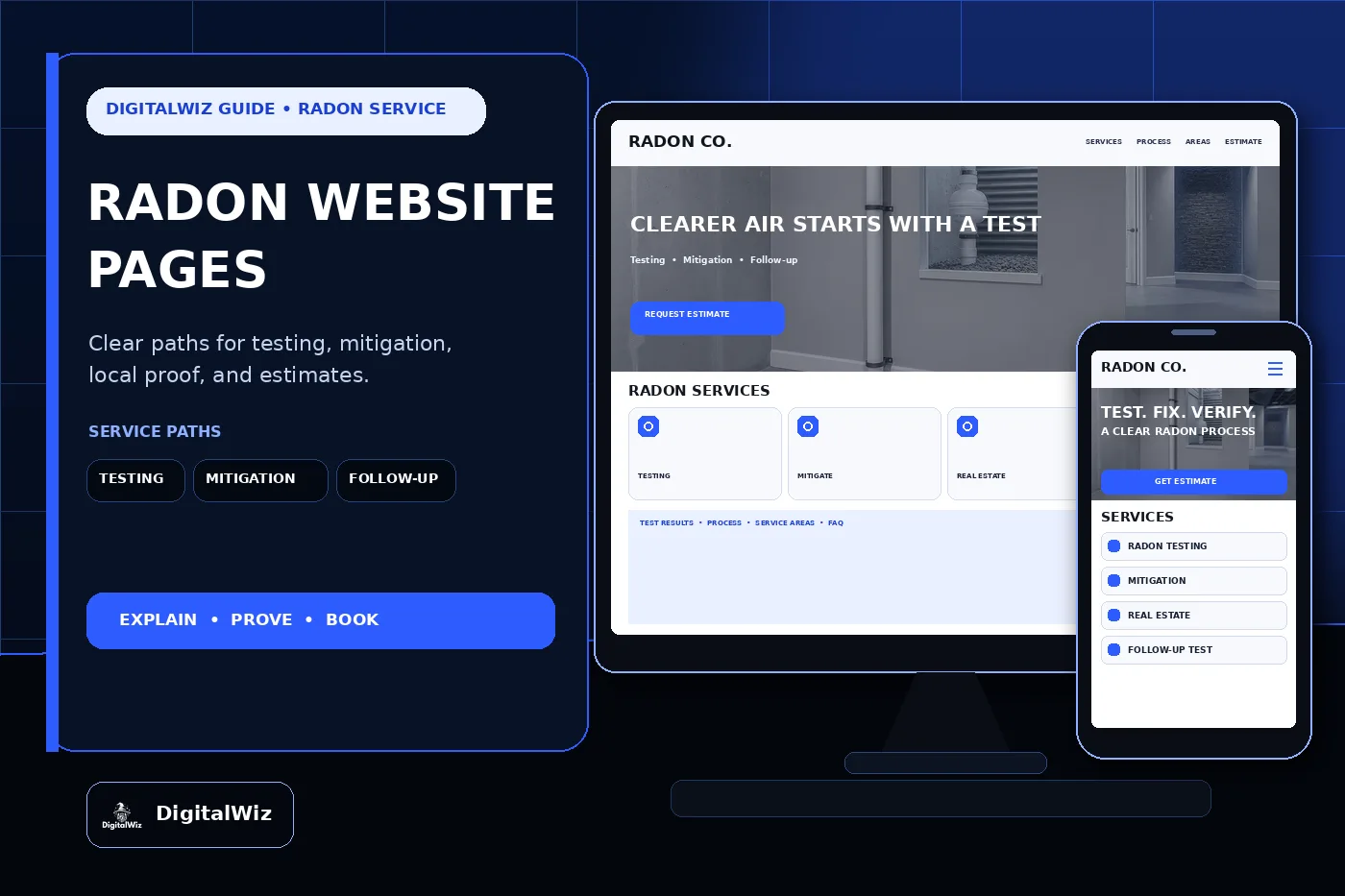
A radon mitigation company website should have focused pages for testing, mitigation, real-estate transactions, system types, follow-up testing, service areas, credentials, pricing context, FAQs, and estimates.
The direct answer
A radon mitigation company website should have focused pages for the work customers actually need to understand: radon testing, mitigation, real-estate transactions, new construction when offered, existing-system evaluation, fan or system service, follow-up testing, service areas, credentials, process, pricing context, FAQs, and estimates. One generic page makes a homeowner decode test results, building conditions, equipment, timelines, and next steps while worrying about the air in the house.
For a Charlotte-area or North Carolina radon company, those paths should separate a homeowner who has never tested from someone holding a result, a buyer or seller on a closing schedule, a builder planning a rough-in, and an owner with an older system that may need attention. A slab, basement, crawl space, addition, sump, drainage system, foundation layout, existing fan, and prior test history can all change the conversation.
Keep the structure tied to the real operation. Give testing and mitigation their own destinations. Explain what the first call covers, which records help, how the property is evaluated, how a proposal is prepared, when follow-up measurement happens, and who handles each part of the job. State the actual territory and make the contact path easy from a phone. That gives the website, Search Visibility, and Paid Ads Management useful landing pages instead of sending every visitor to the homepage.
- Separate testing, mitigation, real-estate, new-construction, existing-system, and service paths when the process differs.
- Explain the test-result review, site evaluation, proposal, installation, system handoff, and follow-up measurement.
- Publish accurate credentials, service areas, scheduling boundaries, warranty terms, and estimate expectations.
- Track calls, forms, qualified appointments, proposals, installed systems, service requests, and lead quality.
Separate testing, mitigation, and real-estate paths
Testing deserves a page of its own, even when the company mainly installs systems. Explain which measurement services are offered, which property types are supported, how devices are placed and retrieved, what the customer must avoid disturbing, how results are delivered, and whether the testing professional is independent from the mitigation proposal. If the company does not provide testing, point customers toward an appropriate qualified provider instead of implying that an estimate is a test.
The mitigation page should begin with what happens after a result. Tell the customer which report details to have ready, what the initial property review covers, which areas need access, how a system approach is selected, and what the written proposal includes. Avoid quoting one universal system from a phone call. Foundation type, soil-gas entry points, connected slabs, crawl-space conditions, sumps, additions, routing, discharge location, electrical scope, and finish expectations may all matter.
Real-estate customers are working against deadlines. Build a clear path for buyers, sellers, agents, inspectors, property managers, and closing teams. State what documents are needed, who authorizes the work, how scheduling is confirmed, whether testing and mitigation are performed by the same business, when a post-mitigation test may occur, how reports are shared, and which payment or access arrangements must be settled before the appointment. Do not promise a closing date until the actual job and measurement schedule are accepted.
A separate existing-system page can catch another valuable call. Homeowners may have an old fan, noisy equipment, a damaged label, changed basement layout, sealed sump concern, unexplained monitor reading, or no recent follow-up test. Explain the company's diagnostic and service limits. A photo can help route the call, but it cannot prove the current radon level or confirm that the entire system is working as intended.
- Testing page: measurement services, device process, property preparation, report delivery, credentials, and limits.
- Mitigation page: result review, property evaluation, system planning, proposal, installation, handoff, and follow-up.
- Real-estate page: parties, documents, access, deadlines, authorization, testing sequence, reports, and payment.
- Existing-system page: fan and component service, inspection boundaries, maintenance questions, records, and retesting.
Explain radon clearly without diagnosing a house online
Start with the basics in plain language. The North Carolina Radon Program describes radon as a colorless, odorless, tasteless radioactive gas formed by the natural decay of uranium in rock, soil, and water. Testing is the only way to know how much is present in a building. That is the right frame for the website: measure first, review the building, then discuss a qualified response.
Keep health language sourced and measured. The U.S. Environmental Protection Agency identifies radon exposure as a lung-cancer risk for smokers and people who have never smoked. A contractor website can link to current public-health guidance, explain why testing matters, and encourage appropriate action. It should not diagnose illness, predict an individual's risk, or turn one short-term reading into a medical claim.
Customers also need help reading a report without being sold a guaranteed outcome. Explain the units shown, the test period, the occupied level tested, device and laboratory information when applicable, and the difference between a measurement result and a mitigation design. Use current EPA and state guidance for action language. Do not hide behind a screenshot of one number, and do not promise that a particular fan or pipe layout will produce an exact future reading in every building.
Answer the common building questions directly. Homes on slabs, crawl spaces, basements, manufactured foundations, and mixed foundations can all be tested. A house does not need a basement to have a radon question. Additions and remodeling can change pressure relationships or create connected areas that deserve review. The educational page should help someone prepare for a professional conversation—not teach unqualified drilling, electrical work, roof penetration, membrane installation, or system modification.
- Use current EPA and North Carolina sources for health, testing, and professional-finding guidance.
- Distinguish a measurement result from a system design, estimate, medical opinion, or guaranteed future level.
- Explain slabs, basements, crawl spaces, mixed foundations, sumps, and additions at a homeowner-friendly level.
- Keep drilling, electrical, membrane, fan, vent, and roof-discharge instructions out of do-it-yourself sales copy.
Show the system process and credentials
A useful system page explains the strategy without pretending every installation is identical. Depending on the building and qualified design, the work may involve soil-gas collection beneath a slab, crawl-space membrane and depressurization, sealed openings, vent piping, a continuously operating fan in an allowed location, discharge routing, a visible system indicator, electrical coordination, labels, and follow-up measurement. Publish only the methods the company is trained, credentialed, insured, and equipped to provide.
Walk through the real job. A customer should be able to picture test-result review, scheduling, arrival, interior and exterior access, foundation and mechanical-area review, routing discussion, proposal approval, property protection, installation, cleanup, system explanation, documentation, warranty handoff, and post-mitigation testing. If electrical work, roofing, excavation, siding repair, waterproofing, mold work, structural repair, or finish carpentry comes from another qualified party, say so before the estimate.
Credentials need exact wording. EPA directs consumers looking for someone to test or fix a home to their state radon program and recognized proficiency programs. List only current certifications, credential numbers where appropriate, employee qualifications, continuing education, insurance, and applicable registrations the business can support. Do not turn one person's credential into a claim about every technician, and do not use agency seals or badges in a way that implies government endorsement.
Show system anatomy with real, permission-safe work. Useful project examples identify the general area, foundation type, starting test context, relevant building conditions, selected approach, routing challenge, installed components, finish details, and follow-up process. Wide shots help buyers understand where piping and equipment sit. Close details can show sealed penetrations, membranes, indicators, fan placement, labels, and neat transitions when the image is accurate and customer information is protected.
- Describe only system methods and components the company actually designs, installs, documents, and supports.
- State access, electrical, roof, siding, drainage, foundation, crawl-space, and finish-work responsibilities clearly.
- Attribute certifications to the correct people and keep proficiency status, insurance, and registrations current.
- Never invent projects, test values, certifications, warranties, reviews, ratings, or before-and-after outcomes.
Explain pricing, warranties, and service areas
Radon mitigation pricing changes with more than square footage. Foundation type, slab and footing layout, crawl-space area, membrane scope, sump and drainage connections, suction points, pipe length and route, fan selection, discharge location, electrical work, roof or exterior penetrations, home height, finished spaces, access, testing, permits when applicable, travel, cleanup, and finish repairs can all move the proposal. A low starting price can create the wrong expectation when it excludes the building the customer owns.
The website can still give useful context. Some companies can publish a site-evaluation fee, service-call minimum, fan-replacement range under defined conditions, or planning range for a straightforward system. Others are better served by explaining cost drivers, which report and property photos help, when an on-site review is required, and what the written estimate includes. The framework in Should I Put Prices on My Business Website? helps add context without pretending every foundation has one price.
Spell out warranty boundaries. Separate workmanship, fan or component manufacturer coverage, membrane work, electrical work, aesthetic repairs, and any performance commitment the company truly offers. State who registers products, what records the owner should retain, which maintenance or retesting responsibilities apply, and how a service request is handled. Never imply that equipment warranty alone guarantees the building's future radon level.
Service areas should match crew reality. Measurement pickup, mitigation installation, follow-up testing, warranty calls, fan service, builder work, and commercial projects may have different travel limits. Publish the core counties and towns the company truly serves, then explain project minimums or schedule boundaries. Create location pages only where the business can add original coverage details, local process information, and real proof—not a city name pasted into the same paragraph.
- Explain the largest foundation, membrane, routing, fan, electrical, testing, access, finish, and travel cost drivers.
- Publish prices, ranges, fees, or minimums only when their conditions can be supported and kept current.
- Separate workmanship, equipment, performance, service, testing, and owner-maintenance terms.
- State real testing, installation, service, builder, commercial, and follow-up coverage when those areas differ.
Make the estimate path useful and track lead quality
A radon request form should collect enough information to route the call without asking the homeowner to design the system. Ask for name, phone, email, property address, owner or transaction role, building type, foundation type if known, test date, test method or provider, result and report upload when available, closing deadline when relevant, finished-space notes, existing-system details, access concerns, and preferred contact time. Keep the form short enough to finish on a phone and make sensitive report uploads optional and securely handled.
Route inquiries where the office process changes. A new test request, elevated result, real-estate deadline, builder rough-in, existing fan problem, commercial property, and post-mitigation test should not all land in one undifferentiated inbox. Confirmation copy should say what happens next, which records to gather, and when the appointment becomes confirmed. It should not promise a test result, installation date, final reading, or closing outcome that nobody has accepted yet.
Then measure beyond raw form count. Record source, campaign, landing page, service area, inquiry type, valid test information, scheduled evaluation, qualified property, proposal, installed system, service call, follow-up test status, and lead quality when the sales process allows it. That shows whether real-estate pages bring schedule-fit jobs, testing ads reach the right territory, or broad health searches create information-only traffic that needs a different next step.
Test the entire journey on a real phone. Tap-to-call should work. Reports should upload without failing silently. Forms should reach the right inbox or CRM. The thank-you message should fit the inquiry. Want a quick read on your own service pages, local-search foundation, estimate flow, proof, and tracking? Run a free BizScore audit.
- Ask for property, role, foundation, test, result, timeline, existing-system, and safe access details.
- Route testing, mitigation, real-estate, builder, commercial, service, and follow-up requests appropriately.
- Track source and landing page through qualified evaluation, proposal, installation, service, and lead quality.
- Use those findings to improve pages, ads, forms, territory, scheduling, handoffs, and follow-up.