What Pages Should a Bathtub Refinishing Company Website Have?
A bathtub refinishing website should separate tubs, tile, showers, repairs, surface eligibility, process, ventilation and safety, color options, projects, care, warranties, service areas, and estimate paths.
The direct answer
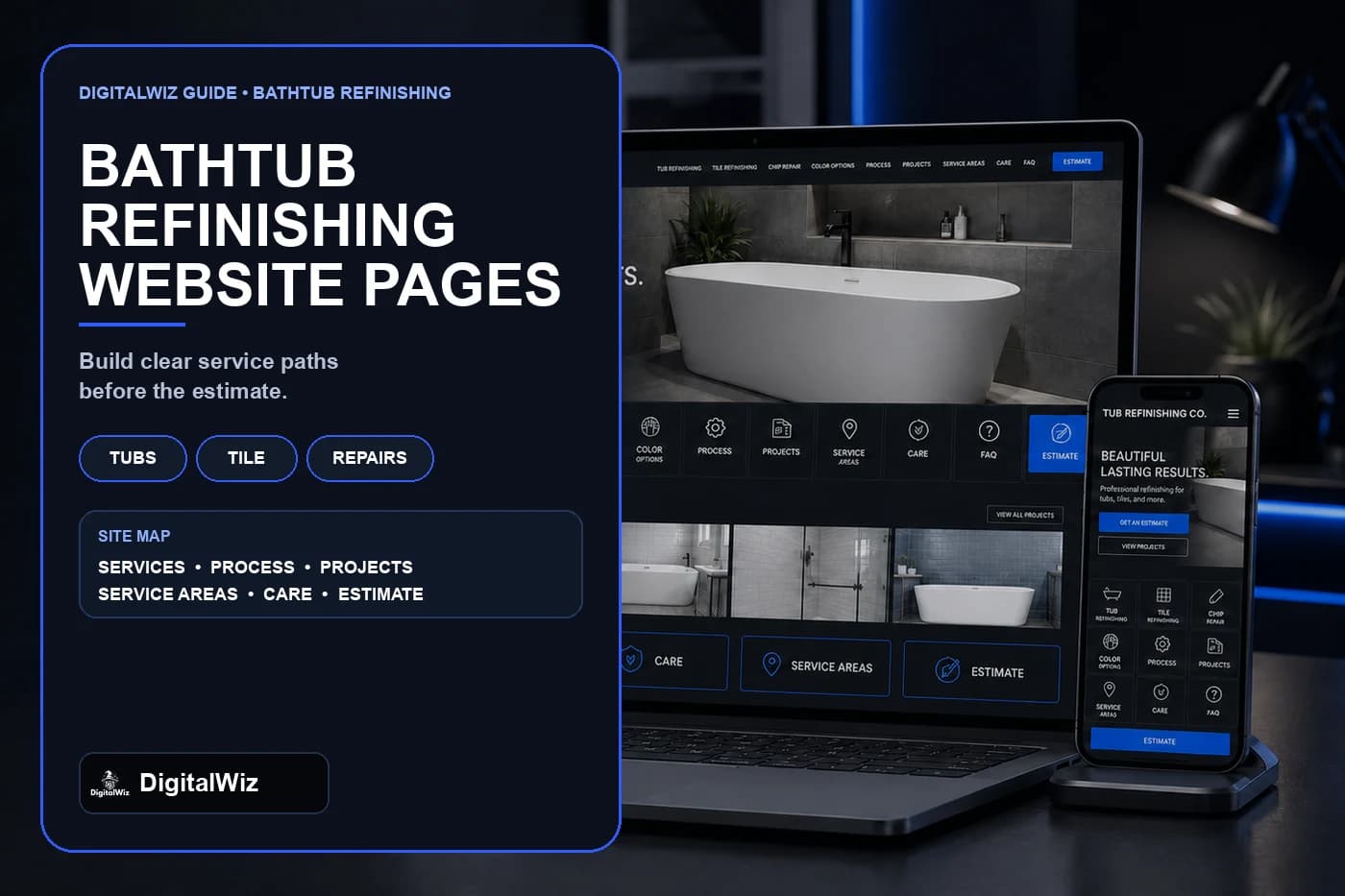
A bathtub refinishing company website should have focused pages for bathtub refinishing, tile or shower refinishing when offered, chip and surface repairs within the company’s scope, supported fixture materials, color and finish options, the preparation and application process, ventilation and jobsite safety, project examples, service areas, care, warranties, FAQs, and estimate requests. One generic page called ‘Tub Reglazing’ leaves too many important questions unanswered.
Start with the surfaces the company can actually inspect, prepare, coat, and stand behind. A worn cast-iron tub is a different conversation from a fiberglass tub with flex or cracks, a cultured-marble vanity, a tile surround with failing grout, a shower pan, a sink, a clawfoot tub, or a fixture that has already been refinished. The website should help a homeowner identify the broad situation without pretending a phone photo confirms the final scope.
Each service page should answer what normally fits, what may not, how the existing finish is evaluated, which repairs are included, what needs to be removed or protected, how the area is ventilated, when the fixture can return to use, how it should be cleaned, and what the written warranty covers. Those pages give the website, Search Visibility, and Paid Ads Management specific landing destinations instead of sending every search and ad click to the same gallery.
Keep the language plain. Customers may use refinishing, resurfacing, reglazing, recoating, restoration, or painting to describe the same need. Explain the company’s preferred term and real process, then make the next step obvious: send safe photos, describe the fixture, share the project address, and schedule the appropriate evaluation.
- Separate tubs, tile, showers, sinks, vanities, repairs, colors, projects, service areas, care, and estimates according to the real offer.
- Explain surface fit, existing coatings, preparation, protection, ventilation, application, cure, cleanup, and handoff.
- Publish honest limits for cracks, movement, rust, moisture, failing substrates, plumbing, caulk, grout, and prior refinishing.
- Track inquiries from source and landing page through qualification, estimate, approval, completion, value, and lead quality.
Separate fixture, surface, and repair paths
Bathtub refinishing deserves its own page with clear material boundaries. Cast iron, steel, porcelain-enamel, fiberglass, acrylic, and other manufactured surfaces do not share one universal preparation or repair plan. State which fixtures the company accepts, whether built-in and freestanding tubs are handled, how drains and overflow hardware are treated, and what conditions require replacement, plumbing work, structural repair, or another specialist.
Tile and shower pages should appear only when the crew genuinely performs that work. Wall tile, tub surrounds, shower walls, shower pans, grout joints, caulk joints, glass enclosures, fixtures, niches, shelves, and transitions can all affect the scope. Refinishing a sound tile field is not the same as fixing loose tile, a leaking assembly, failed waterproofing, movement, mold, or damaged backing. The page should draw that line before the estimate.
Repair pages need the same honesty. Small chips, worn areas, scratches, stains, surface rust, pitting, cracks, flex, soft spots, delamination, previous patches, peeling coatings, and repeated failures do not automatically receive the same remedy. Explain which cosmetic or preparatory repairs may be included and which signs trigger a closer inspection or a different trade. Avoid promising an invisible permanent repair before the fixture is examined.
If sinks, vanity tops, cultured marble, countertops, appliance surfaces, commercial fixtures, hotel work, apartment turns, or property-management programs are offered, give each a useful route. Do not add those terms just to make the service menu look larger. Different materials, access, occupancy, turnaround, documentation, and maintenance expectations can change the job.
- Tubs: supported fixture materials, shapes, existing finishes, hardware, edges, access, repair limits, and return-to-use guidance.
- Tile and showers: accepted walls, pans, grout, caulk, enclosures, transitions, moisture conditions, and exclusions.
- Repairs: chips, scratches, rust, pitting, cracks, flex, delamination, failed coatings, and prior patches handled within a written scope.
- Other surfaces: publish sinks, cultured marble, counters, commercial fixtures, or property programs only when the operation supports them.
Show the real process and put safety boundaries in plain view
A useful process page starts with fit. Map the inquiry, safe photos, address and service-area check, existing-surface questions, prior-coating review, estimate type, jobsite confirmation, written scope, room preparation, fixture and surrounding-area protection, ventilation setup, cleaning and surface preparation, repairs, coating application, cure, cleanup, walkthrough, care instructions, and warranty handoff. If the actual sequence varies by material or product system, say so.
Preparation copy should describe outcomes rather than inviting risky DIY work. The responsible technician may need to identify soap residue, mineral buildup, silicone, oils, corrosion, failed coatings, loose material, moisture, movement, or repairs that will affect adhesion and appearance. Customers can send well-lit photos taken safely from the floor. They should not be asked to strip a coating, mix chemicals, sand an unknown finish, disconnect plumbing, or experiment with solvents for a marketing form.
Ventilation and chemical-safety information belongs on the website because this work happens inside occupied properties. Explain how the company protects the work area, controls access, follows the selected product’s instructions and safety data, ventilates the space, manages ignition and exposure risks, and tells the customer when the room and fixture can be used again. Keep the wording tied to the company’s documented operating procedure, products, equipment, training, and applicable requirements.
Do not turn safety copy into a vague ‘eco-friendly’ badge. The EPA’s methylene chloride risk-management information and OSHA’s methylene chloride resource show why product selection, exposure controls, training, and current rules matter. A refinishing company should publish accurate practices for the materials it uses—not imply that every coating, stripper, or process is harmless.
- Show the complete path from fit check and jobsite confirmation through preparation, application, cure, cleanup, care, and warranty.
- Ask customers for safe photos and basic fixture context without requesting chemical stripping, sanding, disassembly, or diagnosis.
- Explain protection, ventilation, access control, product instructions, safety data, training, and current compliance boundaries accurately.
- Keep room-entry and fixture-use timing tied to the installed system, site conditions, written instructions, and technician handoff.
Explain colors, finish expectations, care, and warranties
A color and finish page should show choices the company can actually reproduce. Whites, off-whites, standard colors, custom matching, gloss levels, textures, decorative effects, and non-slip or grip-related options should be connected to the supported product system and fixture. Screens do not render color perfectly, and an old surrounding surface may have changed over time, so explain how samples and final selections are handled.
Set expectations for the finished surface without underselling the craft. Refinishing can improve a worn fixture dramatically, but the result still depends on the substrate, damage, old coatings, repairs, contours, edges, dust control, lighting, color choice, and agreed scope. Publish close views and whole-room views from real jobs. Do not use a manufacturer-perfect rendering to promise that every repaired tub will look factory-new under every light.
Care instructions need their own page and a printed or digital handoff. State how long the fixture must remain unused, which cleaners and tools are approved, what to avoid, how to handle mats, suction cups, bath products, hair dye, standing water, leaky faucets, caulk, drain work, plumbing repairs, impacts, chips, and service concerns. Product-specific written guidance should control when a general blog or FAQ differs.
Warranty copy should separate coating adhesion, appearance, repair areas, chips, impact, abrasion, staining, rust from the substrate, movement, flex, leaks, plumbing, caulk, grout, standing water, cleaning products, mats, customer damage, commercial use, prior coatings, and work by others. Name the coverage period only when it is current, then explain exclusions, transfer rules, records, inspection, and the claim process. A giant ‘lifetime’ badge is not a warranty.
- Show real supported colors, finishes, textures, samples, and matching limits without promising screen-to-surface accuracy.
- Use permission-safe whole-room and detail photos that show edges, drains, repairs, transitions, gloss, and surrounding surfaces.
- Publish system-specific cure and care guidance for cleaners, mats, water, leaks, caulk, plumbing, impact, and service requests.
- Separate adhesion, appearance, wear, damage, movement, moisture, prior coating, maintenance, commercial-use, and third-party-work coverage.
Use project proof and pricing context customers can compare
Strong project pages identify the broad fixture and property context, original surface, visible condition, prior coating when known, agreed repairs, preparation path, selected color or finish, protection setup, schedule, cure handoff, and finished result. A gallery of identical white-tub close-ups is less useful than a smaller set that explains why each project was a fit and what the scope did not include.
Only publish real, permission-safe proof. Remove addresses, faces, reflections, family items, medications, documents, access codes, security details, and anything else that exposes a customer or property. Never invent reviews, ratings, years in business, project totals, certifications, hotel clients, product approvals, cure times, coating life, savings, before-and-after stories, or warranty outcomes to fill empty cards.
Pricing can move with fixture type and material, size, shape, color, existing coating, coating removal, chips, rust, cracks, flex, delamination, repair scope, tile area, grout and caulk conditions, hardware, plumbing coordination, access, ventilation, occupied-property rules, travel, parking, commercial scheduling, and the selected system. A single teaser price is not meaningful unless the assumptions are visible.
If the company publishes a starting price or package, date it and define the accepted fixture, standard color, included preparation, normal repairs, hardware handling, travel area, taxes, return-to-use guidance, warranty, and conditions that require a revised quote. Make it easy to request an estimate without implying that a photograph locks the final price.
- Document real projects with fixture, surface, condition, prior coating, repair, preparation, finish, schedule, and handoff context.
- Never invent customers, reviews, ratings, credentials, project totals, safety claims, cure times, durability, savings, prices, or warranty outcomes.
- Explain the biggest material, condition, coating-removal, repair, color, access, ventilation, travel, and scheduling cost drivers.
- Define every published price with a date, assumptions, inclusions, exclusions, service area, and changed-scope conditions.
Build useful local estimate paths and track the work that fits
Service-area pages should reflect where the crew actually works and which projects make sense there. Charlotte, Matthews, Mint Hill, Indian Trail, Monroe, Waxhaw, Concord, Huntersville, and nearby communities can bring different travel, parking, property access, apartment or hotel coordination, ventilation setup, scheduling, and minimum-project considerations. Do not clone one thin city paragraph across every town or create fake offices to look larger.
The estimate form should collect enough context to route the request: name, phone, email, project address or ZIP code, property type, owner or manager role, fixture type, approximate age when known, surface material when known, prior refinishing, visible chips or cracks, peeling, rust, leaks, movement, desired color, timing, occupancy, parking or access notes, and safe optional photos. ‘Not sure’ should be a valid answer.
Then track what becomes good work. Record source, campaign, landing page, location, fixture, material, prior coating, condition, requested service, qualification, estimate, approval, schedule, completion, final value, loss reason, and lead quality when the operation supports it. If tile-refinishing ads attract mostly leaking showers outside the company’s scope, page-level data should drive a change in copy, exclusions, targeting, or intake—not a bigger ad budget.
DigitalWiz builds contractor websites, search visibility, and paid-ad systems around the way the company really estimates and completes work. The goal is not a longer service menu. It is a clearer path from ‘Can this tub be refinished?’ to a responsible answer and a useful estimate request. Want a practical list of the service-page, local-search, form, and tracking gaps worth fixing first? Run a free BizScore audit.
- Build local pages around real routes, project minimums, property types, access, ventilation setup, schedule, and crew capacity.
- Ask for fixture, material, prior coating, condition, color, timing, occupancy, location, and safe-photo context without forcing a diagnosis.
- Test tap-to-call, photo upload, confirmations, CRM delivery, estimate routing, and mobile layout end to end.
- Track source and landing page through qualification, estimate, approval, completion, value, loss reason, and lead quality.