What Pages Should a Basement Waterproofing Company Website Have?
A basement waterproofing website should separate water-entry problems, drainage, sump systems, crack work, crawl spaces, inspection, process, projects, warranties, service areas, and estimate paths.
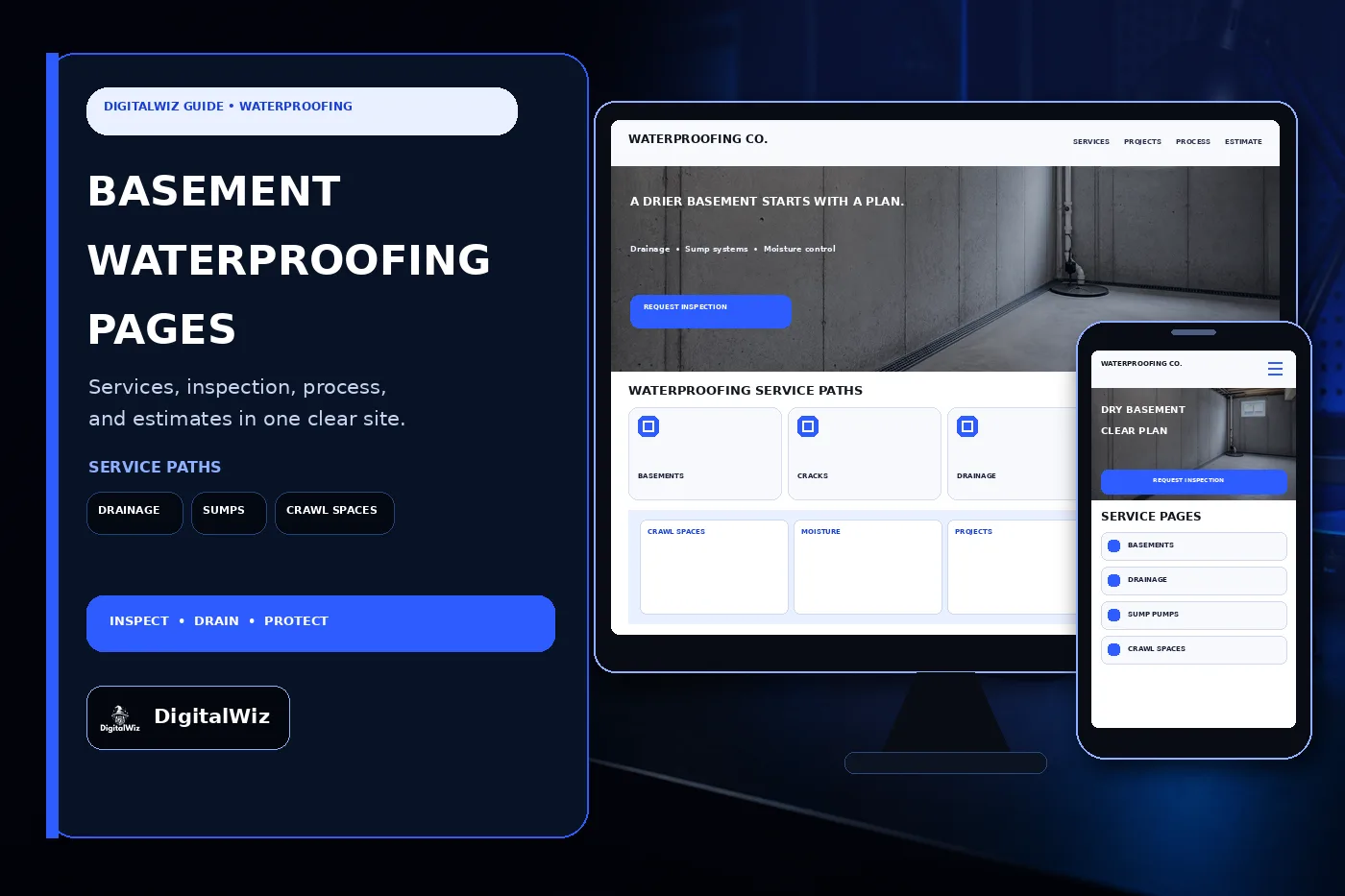
The direct answer
A basement waterproofing company website should have focused pages for basement water problems, interior drainage, exterior drainage when offered, sump pumps and backup systems, crack work, window wells, crawl-space moisture services, inspection, the repair process, real projects, service areas, pricing context, warranties, FAQs, and estimate requests. If foundation repair, structural work, mold remediation, drainage grading, gutters, plumbing, or finished-basement restoration are genuine in-house services, give them their own clear routes too.
Do not force every wet-basement search onto one page that says ‘We keep basements dry.’ Water at a wall-floor joint, a leaking window well, a plumbing leak, surface condensation, groundwater pressure, a blocked exterior drain, and a crack that needs structural review are not the same problem. The website should help a homeowner describe what they see without pretending an online quiz can diagnose the cause.
Specific pages also give the website, Search Visibility, and Paid Ads Management useful destinations. A sump-pump search should reach a sump-system page. An ad about crawl-space moisture should not drop people onto a generic basement gallery and make them hunt.
Keep the promise grounded. A website can explain common symptoms, the company’s inspection process, possible service categories, and what affects the scope. It cannot confirm the water source, structural condition, code requirements, final system design, warranty coverage, or binding price before the property is evaluated.
- Separate basement water, drainage, sump systems, cracks, window wells, crawl spaces, inspection, projects, service areas, warranties, and estimates.
- Add foundation, structural, mold, grading, gutter, plumbing, or restoration pages only when the company truly performs that work.
- Explain what customers can document safely and what still requires an on-site inspection or another qualified trade.
- Track each lead from source and landing page through inspection, proposal, approval, completion, value, and lead quality.
Build pages around symptoms and real services
Start with a useful basement-water page. Organize the symptoms people actually notice: damp walls, staining, mineral deposits, musty odors, water at the cove joint, puddles after heavy rain, wet carpet, leaking window wells, peeling coatings, rust on equipment, or a sump that runs constantly. Then explain that similar symptoms can have different causes. That is a better first step than declaring every stain to be groundwater pressure.
Interior drainage deserves its own page when it is a core service. Explain the broad purpose of the system, where water is collected, how it reaches the sump basin, what parts remain accessible, how the floor is restored, and what happens to finished walls or flooring. Show the systems the company actually installs. Do not publish a cutaway diagram that looks universal when wall construction, footing shape, slab conditions, utilities, discharge, and local requirements can change the plan.
Exterior work needs a separate route if the crew offers it. Excavation, membranes, drainage board, footing drains, downspout or surface-water corrections, grading, access, landscaping, decks, porches, utility locations, property lines, soil, disposal, and restoration can all affect the job. If the business only installs interior systems, say that plainly rather than using exterior-waterproofing keywords for work it does not provide.
Create focused pages for crack repair, window wells and drains, discharge lines, dehumidification, or other supported services. Each page should state the conditions the company reviews, the normal inspection path, important scope boundaries, and situations that may require structural, plumbing, environmental, electrical, landscaping, or drainage expertise outside the company’s contract.
- Symptom pages: wall dampness, cove-joint water, puddles, staining, odors, window-well leaks, and recurring sump activity.
- Interior system pages: collection path, basin, pump, discharge, slab restoration, access, finishes, maintenance, and limitations.
- Exterior pages: excavation, membranes, drainage, utilities, access, soil, landscaping, restoration, and scope only when offered.
- Detail pages: cracks, window wells, discharge, dehumidification, grading, and adjacent work according to the real operation.
Give sump pumps, crawl spaces, and moisture their own paths
A sump-pump page should explain more than horsepower. Show the company’s approach to basin condition, primary pumps, check valves, discharge routing, alarms, battery or water-powered backup options when offered, electrical needs, maintenance access, testing, replacement, and what happens during a power outage. Tie exact capacity and product claims to the selected equipment and current manufacturer documentation. A bigger number on a box is not a complete system design.
Be careful with backup language. Battery age, charger condition, pump demand, outage length, maintenance, discharge restrictions, and the condition of the primary system all matter. The site can explain why redundancy may be useful without guaranteeing uninterrupted protection in every storm, outage, blockage, mechanical failure, or water event.
Crawl-space services need a separate page because the building conditions and work sequence differ. Describe inspection, ground moisture, drainage, standing water, vents, access, insulation, ducts, plumbing, wiring, wood conditions, vapor barriers, sealed or conditioned approaches, dehumidification, sump systems, pest evidence, and clearance. State whether the company handles insulation removal, debris, drainage, electrical work, plumbing leaks, wood repair, pest treatment, or mold remediation—or coordinates someone else.
Moisture and mold wording needs restraint. EPA’s guide to mold, moisture, and your home emphasizes controlling moisture as a key part of mold control. A waterproofing site can explain the moisture conditions it investigates and corrects within scope, but it should not identify an unknown growth from a photo, make health diagnoses, or imply that drainage work automatically replaces appropriate assessment or remediation.
- Sump pages: basin, primary pump, check valve, discharge, alarms, backups, power, access, testing, service, and replacement.
- Crawl-space pages: water, ground vapor, vents, insulation, ducts, utilities, wood, access, drainage, sealing, and dehumidification.
- State which electrical, plumbing, structural, pest, insulation, cleanup, and remediation work is included or referred.
- Do not diagnose mold, health effects, structural movement, or the source of water from a marketing photo or quiz.
Show the inspection and installation process
The process page should follow the real customer journey. Start with the inquiry and service-area check. Then show the phone conversation, safe photo or video intake, scheduling, on-site inspection, moisture and drainage observations, review of accessible areas, discussion of findings, proposed scope, options, written estimate, customer approval, scheduling, preparation, installation, cleanup, walkthrough, documentation, maintenance, and warranty handoff.
Define what the inspection includes. Does the representative examine only the basement interior, or also accessible exterior grading, downspouts, window wells, discharge locations, crawl spaces, mechanical areas, and finished rooms? Are moisture readings, pump tests, camera inspection, elevation checks, or structural observations part of the normal visit? Avoid calling every sales appointment an engineering inspection if no engineer is involved.
Preparation guidance should be safe and practical. Customers may need to clear stored items from a defined work zone, provide access, secure pets, identify known utilities or previous repairs, and share photos of where water appeared. Do not ask them to open electrical panels, enter a flooded space, move heavy appliances, disturb suspected mold, remove finished walls, or test a pump in unsafe conditions just to qualify a lead.
Installation pages should explain protection, dust control, demolition limits, drain or basin work, pump and discharge setup, electrical or plumbing coordination, concrete restoration, debris removal, cleanup, testing, walkthrough, and work by others. If finished walls, flooring, cabinets, stairs, utilities, radon systems, or structural elements affect the job, explain how those conditions are handled in the proposal rather than hiding them in fine print.
- Map inquiry, inspection, findings, options, proposal, approval, preparation, installation, testing, cleanup, and handoff.
- Describe the accessible areas, observations, measurements, tests, exclusions, and qualifications involved in the visit.
- Give customers a safe preparation list without asking them to enter water, disturb materials, or investigate utilities.
- Explain finish removal, dust, access, drainage, pump, discharge, concrete, electrical, plumbing, cleanup, and restoration boundaries.
Use projects, pricing, and warranties responsibly
Project pages work best as short case studies. Show the general symptom, broad property type, accessible conditions, inspection findings, selected service, major system components, scope boundaries, installation sequence, restoration included, and the finished accessible result. Use wide room views and details of the actual drain, basin, pump, discharge, wall treatment, or crawl-space assembly. A close-up of a dry concrete wall without context does not prove what solved the problem.
Only use real, permission-safe work as proof. Remove addresses, family photos, documents, valuables, security details, equipment serial numbers, and anything else that identifies the homeowner. Never invent reviews, ratings, storm claims, years of dryness, pump performance, project totals, engineering conclusions, certifications, warranties, prices, savings, or before-and-after stories to make a template look complete.
Pricing pages can still be useful. Explain the factors that move the cost: inspection findings, water source, linear footage, wall and slab construction, interior or exterior approach, excavation depth, access, soil, utilities, basin and pump selection, backup equipment, discharge route, electrical work, demolition, finishes, debris, restoration, travel, permits, and work by other trades. Publish ranges only when assumptions are clear and somebody keeps them current.
Warranty pages should separate equipment manufacturer coverage from the contractor’s workmanship or system warranty. Define covered components, registration, maintenance, transfer rules, service process, exclusions, access requirements, power failure, pump or battery wear, blocked or frozen discharge, plumbing events, surface water, sewer backup, condensation, structural movement, alterations, extreme events, and work by others according to the real written documents. Do not summarize a warranty more generously than the contract does.
- Caption projects with symptoms, property context, inspection findings, selected scope, components, constraints, and handoff.
- Never fabricate customers, reviews, ratings, performance, dryness periods, certifications, prices, savings, or structural conclusions.
- Explain the inspection, footage, construction, access, excavation, pump, discharge, finish, restoration, and adjacent-trade cost drivers.
- Separate manufacturer, equipment, workmanship, system, maintenance, transfer, service, and exclusion terms accurately.
Create local estimate paths and track qualified work
Service-area pages should match where the company can inspect, install, discharge water, service equipment, and honor its warranty. Charlotte, Matthews, Mint Hill, Indian Trail, Monroe, Waxhaw, Concord, Huntersville, and nearby communities can bring different soils, slopes, lot drainage, property access, finished basements, crawl spaces, utilities, neighborhoods, association rules, permit questions, and travel. Do not clone one thin paragraph across every town or claim fake local offices.
The estimate form should collect enough context to route the request: name, phone, email, property address or ZIP code, basement or crawl space, finished or unfinished area, when water appears, where it is visible, approximate timing, known sump equipment, previous repairs, safe optional photos, access notes, and whether active standing water or an urgent electrical hazard is present. Keep it short enough to finish on a phone.
Build different paths for an inspection request, existing-customer service, pump replacement, warranty question, maintenance, commercial or multifamily work, crawl-space work, and emergencies when those workflows differ. Confirmation copy should say what happens next and whether a visit is requested or actually scheduled. A form submission is not a diagnosis, guaranteed emergency response, or approved installation date.
Then measure which marketing produces work the company wants. Track source, campaign, landing page, location, property type, symptom, requested service, appointment, inspection outcome, proposal, approval, job value, loss reason, service call, and lead quality when the operation supports it. DigitalWiz builds contractor websites, search visibility, and paid-ad systems around the way the company really inspects and sells. Want a practical list of the service-page, local-search, estimate, and tracking gaps worth fixing first? Run a free BizScore audit.
- Build local pages around the real inspection territory, system service area, access, drainage, scheduling, and warranty capacity.
- Ask for property, area, symptoms, timing, existing equipment, previous work, access, and safe photos without diagnosing online.
- Test tap-to-call, photo upload, confirmations, CRM delivery, appointment routing, service requests, and mobile layout end to end.
- Track source and landing page through appointment, inspection, proposal, approval, value, loss reason, service, and lead quality.