What Pages Should an Appliance Repair Company Website Have?
An appliance repair website should separate refrigerator, oven, dishwasher, laundry, maintenance, service-area, process, pricing, proof, FAQ, and booking paths.
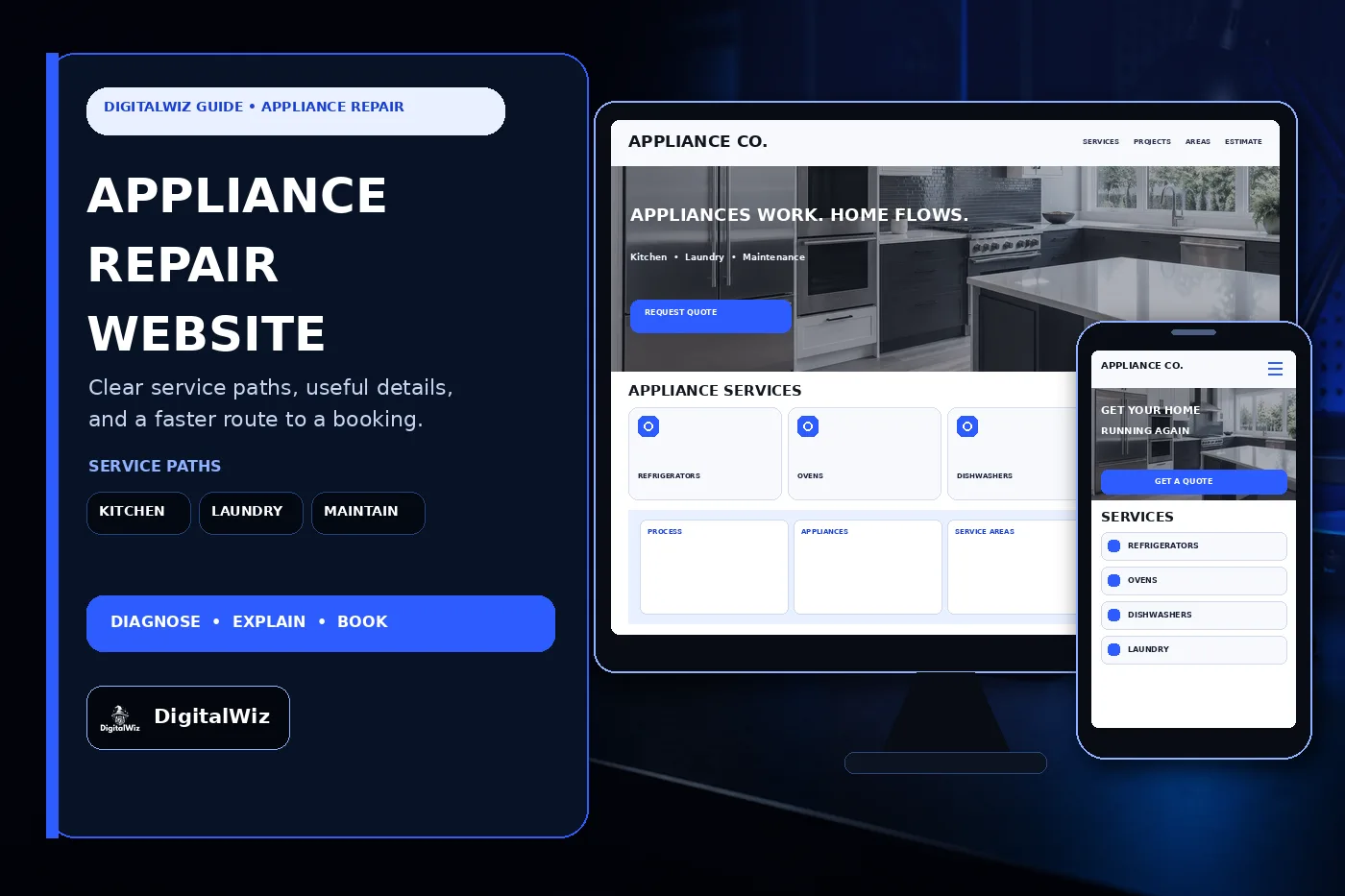
The direct answer
An appliance repair company website should have focused pages for refrigerator and freezer repair, ovens and ranges, dishwashers, washers and dryers, maintenance when offered, commercial appliance work when supported, service areas, the repair process, pricing context, credentials, real project proof, FAQs, and booking. One catch-all repair page makes a homeowner hunt for the appliance, symptom, brand policy, territory, and next step.
Start with the calls the company can actually handle. A Charlotte-area technician who works on residential kitchen and laundry equipment needs a different page plan than a team servicing restaurants, laundromats, property managers, warranty networks, sealed refrigeration systems, or specialty appliances. Separate those paths whenever training, licensing, parts, scheduling, diagnostic fees, service vehicles, account terms, or response procedures change.
Each page should answer fit before pushing a form. Explain the appliance types served, common symptoms, brands or product categories supported, service territory, first diagnostic step, safety limits, fee structure, parts process, and what happens after someone books. That gives the website, Search Visibility, and Paid Ads Management useful landing pages instead of sending every searcher to a generic homepage.
- Create a focused page for each appliance category and customer type the company reliably serves.
- Explain diagnosis, approval, parts, return visits, repair, testing, payment, and follow-up.
- Publish accurate service limits, brand policies, fees, warranties, credentials, and availability.
- Track calls and forms through booked diagnosis, approved repair, completed job, value, and lead quality.
Separate kitchen, laundry, maintenance, and commercial service paths
Kitchen appliances should not be compressed into one line. A refrigerator page can cover cooling loss, ice makers, water dispensers, unusual noise, leaks, temperature swings, door seals, and the limits around sealed-system work. Oven and range pages can separate electric, gas, induction, wall-oven, cooktop, ignition, heating, temperature, control, and ventilation concerns—but only for equipment the technician is trained and authorized to service.
Dishwasher work brings another buying path. Customers want to know whether the company handles draining, filling, leaking, cleaning, drying, latch, rack, pump, and control concerns; what information to gather from the model label; and whether they should stop using the unit before the appointment. Laundry pages should make washer and dryer coverage equally clear, including stack units, gas or electric dryers, vent-related boundaries, drainage, spinning, heating, noise, vibration, and installation issues.
Maintenance deserves its own page only when it is a real service. Explain which appliances are included, what the visit checks, what cleaning or adjustment is performed, what is excluded, and whether the service can identify—but not guarantee prevention of—future failures. Commercial pages should identify supported equipment and account types without implying that residential experience automatically covers restaurant, medical, hospitality, laundry, or industrial systems.
- Refrigerators and freezers: unit types, symptoms, ice and water systems, temperature concerns, and sealed-system limits.
- Cooking equipment: ranges, ovens, cooktops, fuel types, heating, ignition, controls, and supported ventilation work.
- Dishwashers: water, drainage, leaks, cleaning, drying, pumps, latches, racks, and control concerns.
- Laundry and commercial: washer and dryer types, vent boundaries, account requirements, equipment scope, and scheduling.
Explain the diagnostic visit, parts process, and repair decision
Appliance repair starts with diagnosis, not a promise based on one symptom. The process page should explain how to book, what model and serial information helps, which photos are useful, how to prepare the appliance area, what access the technician needs, and what the customer can expect when the technician arrives. If a diagnostic or trip fee applies, state how it works and whether any portion is credited toward an approved repair.
Then spell out the decision point. A useful site explains that the technician inspects and tests the equipment, identifies the likely fault, checks parts availability, provides an estimate, and asks for approval before added work. If the repair requires an ordered part or return visit, explain scheduling, deposits when applicable, cancellation terms, and how the appliance should be used—or not used—while the customer waits.
Be careful with parts language. Original, manufacturer-authorized, aftermarket, rebuilt, customer-supplied, and used components are not interchangeable claims. Publish only the options the business truly offers, along with the applicable workmanship and part-warranty terms. Do not promise same-day parts, permanent repairs, exact completion times, or universal brand coverage when availability and equipment condition can change the outcome.
- Tell customers what model, serial, symptom, error, photo, access, and timing details to prepare.
- Describe diagnosis, estimate, approval, parts sourcing, return scheduling, installation, testing, and payment.
- State how diagnostic fees, deposits, credited fees, cancellations, and added findings are handled.
- Keep parts, labor, workmanship, manufacturer, and customer-supplied-component terms distinct.
Build trust with accurate credentials, safety boundaries, and real proof
Customers are letting a technician into their home and trusting them around electricity, gas, water, heat, refrigerants, cabinetry, and expensive equipment. Publish the legal business identity, real contact information, service territory, insurance information available for review, technician qualifications, and any licenses or certifications that genuinely apply. Credential requirements can vary by trade and scope, so link to the relevant official authority instead of turning one certificate into a blanket claim.
Safety wording should be calm and specific. The site can tell a customer to stop using an appliance when there is smoke, sparking, a gas odor, active leaking near electricity, severe overheating, or another immediate hazard, then direct them to emergency services, the utility, or the appropriate qualified professional when needed. It should not coach homeowners through live electrical testing, refrigerant handling, gas adjustments, bypassing safety devices, or dismantling a machine.
Real project examples can show fit without exposing a household. With permission, share the appliance category, general symptom, diagnostic finding, repair scope, broad service area, parts path, and final verification. Never invent ratings, review counts, years in business, first-visit fix rates, savings, warranty approvals, customer totals, before-and-after performance, or manufacturer relationships. A neutral website mockup illustrates page structure; it is not customer proof.
- Publish the legal identity, contact details, territory, applicable credentials, and verification paths accurately.
- Give clear stop-use guidance for immediate hazards without publishing risky do-it-yourself repair steps.
- Use permission-safe job examples with appliance, symptom, finding, scope, and testing context.
- Avoid invented reviews, rankings, response times, savings, success rates, affiliations, and guarantees.
Give useful pricing and warranty context without guessing the repair
Appliance repair pricing can change with appliance type, age, accessibility, symptom, diagnostic time, parts, shipping, labor, repeat visits, built-in installation, stacked equipment, gas or water connections, after-hours availability, and whether another trade must correct an underlying issue. A low service-call number is not useful if the site hides what it includes or suggests every symptom has one fixed repair price.
The website can still make pricing clearer. Explain the diagnostic fee, trip fee, minimum labor, estimate approval process, common payment methods, tax treatment where applicable, and whether the fee is credited to an approved repair. Publish exact prices or ranges only when the assumptions are stable and current. Otherwise, explain the factors that change the quote and when the customer receives a written estimate.
Warranty language needs the same precision. Separate workmanship coverage from parts coverage, manufacturer warranties, extended-service plans, home warranties, and third-party administrators. State who must authorize covered work, what documentation is needed, whether the company participates in those programs, and what exclusions or service areas apply. Never imply that a manufacturer or warranty company has approved a claim before it has.
- Explain diagnostic, trip, minimum-labor, parts, return-visit, after-hours, and accessibility cost drivers.
- Say when the customer receives an estimate and how approval, deposits, changes, and payment work.
- Publish prices and ranges only with clear, current assumptions.
- Separate workmanship, parts, manufacturer, extended-plan, and third-party warranty responsibilities.
Make mobile booking useful, then measure which leads turn into repairs
An appliance repair form should collect enough information to route the call without asking a homeowner to diagnose the machine. Ask for name, phone, email, service address or ZIP code, appliance category, approximate age, brand and model when known, symptom, error code, fuel type when relevant, whether the unit is built in or stacked, preferred timing, and optional photos of the model label or visible issue taken safely.
Route inquiries where the workflow changes. No-cool refrigeration, active leaks, gas odors, stacked laundry, built-in equipment, commercial units, warranty requests, landlord or property-manager work, out-of-area calls, and unsupported brands should not all enter the same queue. Confirmation copy should explain the review and scheduling step without promising immediate availability, a diagnosis, an exact part, or a final price.
Track more than form submissions. Record source, campaign, landing page, appliance type, territory, brand policy, booked diagnostic, qualified job, estimate status, parts requirement, approved repair, completed repair, revenue, cancellation, and lead quality when the workflow supports it. That shows whether refrigerator pages bring serviceable calls, paid search reaches the right territory, or broad traffic keeps producing unsupported equipment and warranty requests.
Test the entire route on a real phone. Tap-to-call should work, model details should be optional, uploads should be easy, and the request must reach the right scheduler. Want a clear view of your appliance service pages, local visibility, booking path, and tracking gaps? Run a free BizScore audit.
- Ask for appliance, symptom, model details, fuel type, access, location, timing, and safe optional photos.
- Route urgent hazards, refrigeration, laundry, built-ins, commercial, warranty, unsupported, and out-of-area requests.
- Track source and landing page through diagnosis, estimate, parts, approval, completion, value, and lead quality.
- Use the findings to improve pages, ads, territory, scheduling, intake, parts handoffs, and follow-up.