What Pages Should a Window Replacement Company Website Have?
A window replacement website should separate window types, materials, installation paths, projects, service areas, warranties, financing, and consultation routes.
The direct answer
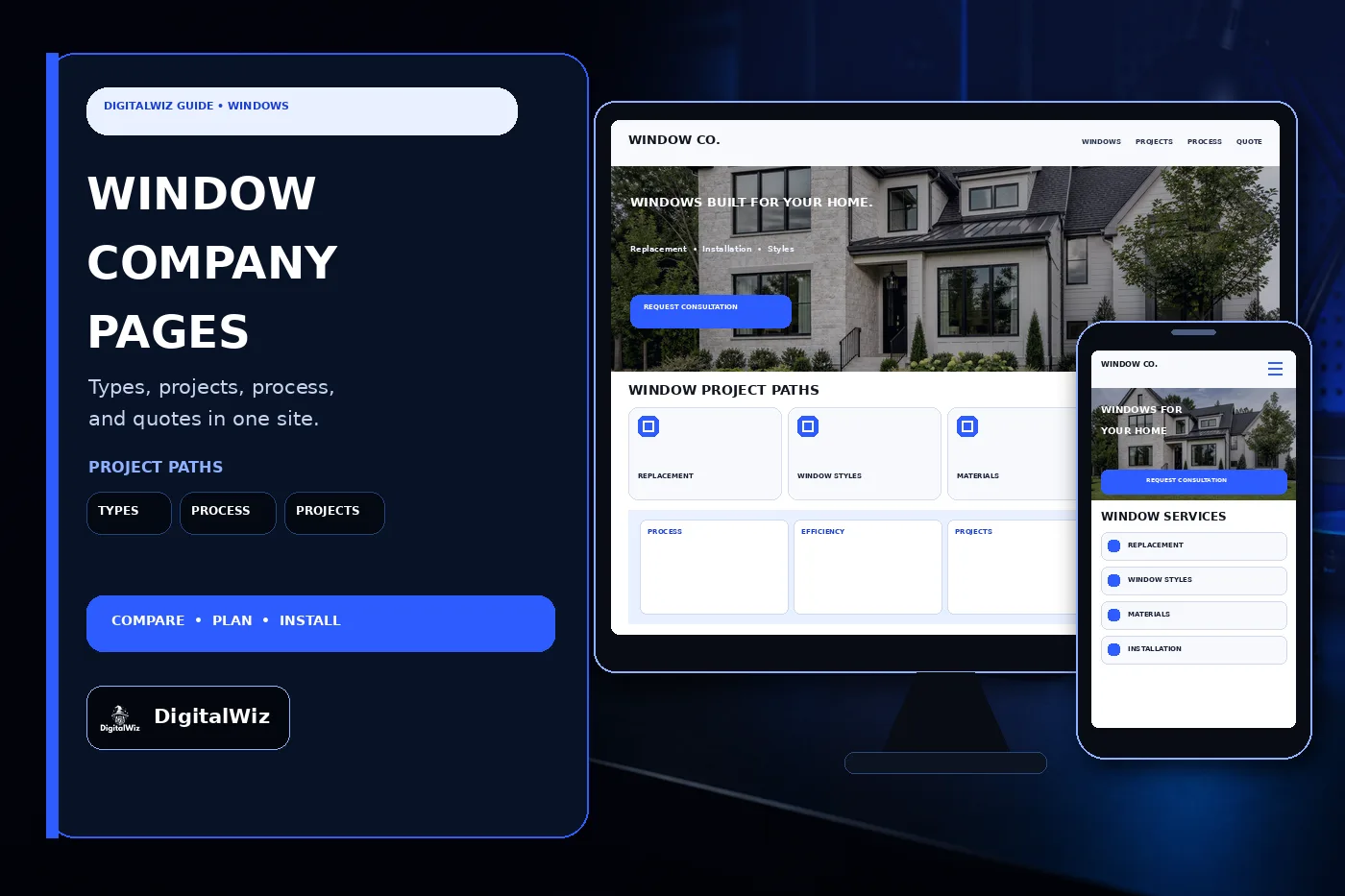
A window replacement company website should have focused pages for full-home replacement, supported window styles, frame materials, glass and efficiency options, installation approaches, doors when genuinely offered, the consultation and measurement process, project examples, service areas, warranties, financing when available, FAQs, and quote requests. One catch-all page called ‘Windows’ makes homeowners guess whether the company handles their opening, material, project size, installation condition, or budget conversation.
Start with the work the company can actually inspect, measure, order, install, and stand behind. A crew replacing twenty existing windows needs a different path from a company that handles one damaged unit, new-construction openings, historic homes, bay windows, structural resizing, storm products, storefront glazing, or entry and patio doors. If a service is not supported, leave it out. A long menu is not useful when half the clicks lead to work the company declines.
Each page should answer the questions that come before an in-home consultation: which properties and project sizes fit, which window types are available, what gets measured, whether the existing frame stays, how trim and finishes are handled, which conditions may change the scope, who handles permits or adjacent trades, and what happens next. That gives the website, Search Visibility, and Paid Ads Management specific landing pages instead of sending every local search and ad click to the same gallery.
Keep it readable. Homeowners do not need a catalog dumped into one page. They do need a clear route from the problem they notice—drafts, difficult operation, failed glass seals, rot, noise, water concerns, fading, or an outdated look—to a professional assessment. The site should help them compare paths without pretending a photograph can diagnose the opening.
- Separate full-home replacement, supported styles and materials, installation methods, doors, repairs, and every other real project path.
- Explain consultation, measurement, selection, proposal, ordering, preparation, installation, cleanup, walkthrough, and warranty handoff.
- Publish accurate product options, performance labels, service territory, credentials, financing terms, warranties, maintenance, and exclusions.
- Track inquiries through qualification, consultation, proposal, approval, ordering, installation, completion, source, value, and lead quality.
Separate replacement paths, window styles, materials, and doors
Full-home replacement deserves its own page. Explain whether the company works with existing openings, performs insert or full-frame replacement, replaces interior or exterior trim, handles sill or frame damage within an approved scope, removes old units, protects rooms and landscaping, disposes of debris, and completes exterior sealing and interior finish work. The signed proposal controls the job, but the website should show which pieces the team evaluates.
Window-style pages help buyers understand function, not just appearance. Double-hung, single-hung, casement, awning, slider, picture, geometric, bay, bow, garden, egress, and specialty units operate differently and can bring different ventilation, cleaning, hardware, screen, safety, structural, and installation questions. Publish only the styles the company can source and install. A pretty bay-window photo should not imply that every wall can accept one without a broader review.
Material pages need the same honesty. Vinyl, fiberglass, wood, clad wood, aluminum, composite, and specialty systems differ in profiles, finish choices, maintenance, dimensions, expansion, field repair, lead time, and installation details. Avoid declaring one material universally best. Show where each supported line tends to fit, which options are available through the company, and where product-specific documentation belongs in the selection process.
Doors should have a separate route when the business installs them. Entry doors, patio sliders, hinged patio doors, storm doors, sidelights, transoms, and multi-panel systems are not just oversized windows. Thresholds, water management, security, hardware, screens, accessibility, floor transitions, wall conditions, structural openings, electrical devices, alarms, and interior or exterior finishes can all change the work. If the company does not install doors, do not use door imagery to make the portfolio feel larger.
- Replacement: insert and full-frame fit, retained components, trim, finishes, damage review, protection, removal, disposal, and sealing.
- Styles: supported operating types, fixed units, special shapes, bays and bows, egress applications, screens, hardware, and cleaning access.
- Materials: real vinyl, fiberglass, wood, clad, aluminum, composite, finish, profile, maintenance, availability, and limitation choices.
- Doors: supported entry and patio systems, opening conditions, thresholds, hardware, screens, finishes, security, and adjacent-trade scope.
Show the consultation, measurement, selection, and installation process
A credible process page begins with fit, not a countdown timer. Map the inquiry, address and service-area check, project type, safe ground-level photos when useful, discovery call, home visit, opening review, preliminary measurement, style and material discussion, glass and finish selections, written proposal, final measurement, contract, deposit, ordering, delivery planning, installation, cleanup, walkthrough, product records, and warranty handoff.
Measurement deserves careful wording. Rough openings, existing frames, trim, wall depth, siding or masonry, interior finishes, floor conditions, nearby fixtures, window treatments, access, stories, rooflines, and custom shapes can affect the plan. Tell homeowners that online dimensions and photos can start the conversation but do not replace the company’s final field measurement. Never ask someone to lean out a window, climb a ladder, remove trim, or open a damaged assembly for a marketing form.
Then explain insert and full-frame installation without pretending one method always wins. An insert may retain compatible existing frame components and reduce finish disruption. Full-frame work can expose more of the opening and may be appropriate when retained components are unsuitable or the project requires a broader change. The right path depends on the existing assembly, product, condition, goals, contracted scope, and applicable requirements—not a slogan.
Site-preparation guidance should be practical. Cover access to each opening, furniture, blinds and curtains, wall hangings, alarms, pets, children, landscaping, gates, parking, material storage, dust protection, weather, working hours, cleanup, and rooms that need special care. Also explain how the team handles a changed condition: document it, discuss options, price or schedule the additional scope, get written approval, and then continue.
- Map the complete path from fit check and field review through final measure, selections, proposal, order, installation, cleanup, and handoff.
- Explain why safe photos and customer measurements are preliminary and why final product dimensions belong to the responsible professional.
- Describe insert and full-frame paths, retained components, finish impact, and condition review without making universal promises.
- Give customers a room-by-room preparation checklist and a written change process for concealed or newly discovered conditions.
Explain glass, performance, installation details, and warranties accurately
Performance pages should translate the label instead of promising a miracle. Explain the product options the company actually carries: glazing layers, gas fills when applicable, low-emissivity coatings, spacers, frame systems, air leakage information, visible transmittance, condensation-related ratings when provided, U-factor, and solar heat gain coefficient. Tie exact values to the selected product, size, configuration, label, climate, and current documentation.
The ENERGY STAR windows, doors, and skylights guidance gives homeowners a useful official starting point for product efficiency. The website should still avoid turning a certification mark into a guaranteed utility-bill result. House size, orientation, shading, existing windows, air sealing, insulation, equipment, thermostat settings, weather, energy prices, installation, and household behavior all affect the outcome.
Installation details matter because a high-performing unit still meets a real wall. Explain the company’s approach to opening review, shimming and fastening, perimeter gaps, air and water management, flashing or sealant systems where applicable, exterior cladding transitions, sill conditions, interior trim, exterior trim, screens, hardware adjustment, operation checks, cleaning, and documentation. Keep the page at a homeowner-safe level; product instructions, site conditions, the contract, and applicable requirements control the actual work.
Warranty copy should separate product, glass, finish, hardware, screen, seal, labor, installation workmanship, retained existing components, trim, sealants, caulk maintenance, condensation, breakage, impact, water from other building components, movement, misuse, and service-call responsibilities. State the provider, transfer rules when applicable, required records, exclusions, and claim path. A giant ‘lifetime’ badge without those details creates questions, not trust.
- Explain the real labels and options the company sells without translating one product rating into a whole-house guarantee.
- Tie certification, performance, comfort, sound, fading, condensation, and savings language to documented limits and actual conditions.
- Describe opening preparation, fastening, gaps, water and air management, trim, operation checks, cleanup, and records accurately.
- Separate product, glass, finish, hardware, screen, seal, workmanship, retained-component, maintenance, damage, and service coverage.
Use project proof, pricing, and financing without invented results
Strong project pages show more than a perfect after photo. With permission, identify the broad home and project type, original concern, approximate number and style of units, insert or full-frame path, frame and finish direction, glass choices, interior and exterior trim scope, access conditions, notable openings, approved changed conditions, adjacent-trade coordination, and finished result. Detail photos of sills, trim, operation, screens, bays, doors, and exterior transitions often answer more than another wide facade shot.
Only use real, permission-safe proof. Remove addresses, family photos, children, reflections of people, alarm details, access codes, paperwork, computer screens, license plates, and sensitive neighboring-property information. Never invent reviews, star ratings, project totals, years in business, certifications, manufacturer status, customer names, energy savings, noise reductions, installation times, warranty outcomes, or before-and-after stories to fill an empty site.
Window pricing can move with unit count, style, dimensions, material, finish, glass package, grids, screens, hardware, opening condition, insert or full-frame scope, interior and exterior trim, stories, access, masonry or siding transitions, structural changes, disposal, permits, lead time, product availability, protection, travel, and concealed conditions. A price per opening says little until the product and included installation scope are clear.
Financing pages need equal care. Publish financing only when there is a real current program, and name the provider or application path, eligibility boundaries, term options, interest or promotional conditions, fees, expiration, payment timing, and the difference between a financing example and an approved offer. Do not display a tiny monthly payment while hiding the project assumptions. Keep price and financing copy dated so an old promotion does not become a permanent promise.
- Show permission-safe projects with the original need, unit mix, product direction, installation path, trim scope, conditions, and finished context.
- Never invent reviews, ratings, projects, clients, credentials, savings, comfort gains, schedules, prices, warranty outcomes, or rankings.
- Explain the biggest unit, material, glass, opening, trim, access, finish, disposal, permit, availability, and condition cost drivers.
- Define every published price or financing example with dates, assumptions, provider, eligibility, inclusions, exclusions, terms, and approval path.
Build local consultation paths and track the projects that fit
Service-area pages should reflect where the company actually installs and which projects make sense there. A full-home replacement territory may differ from the radius for one damaged unit. Charlotte, Matthews, Mint Hill, Indian Trail, Monroe, Waxhaw, Concord, Huntersville, and nearby communities can bring different travel, product, access, neighborhood, historic-district, permit, lead-time, and project-minimum considerations. Do not clone one thin city paragraph and call it local expertise.
Credentials should attach to the correct legal business and scope. Publish the company identity, insurance-document process, real manufacturer or dealer relationships, training claims, applicable licensing information, and who provides each warranty. A certification for one product line does not automatically cover every product, crew, location, or installation claim. Make verification easy instead of stacking badges with no explanation.
The consultation form needs enough detail to route the project without asking the homeowner to diagnose the wall. Ask for name, phone, email, project address or ZIP code, broad number of windows or doors, replacement or new-opening interest, styles or materials when known, visible concern, stories, timing, planning range when the company uses one, access notes, and safe optional ground-level photos. ‘Not sure’ should be a valid answer.
Then track what becomes a good project. Record source, campaign, landing page, location, project type, unit count range, product interest, qualification, consultation, measurement, proposal, revision, approval, financing status when relevant, order, installation, completion, final value, loss reason, and lead quality when the operation supports it. Google recommends that eligible LocalBusiness structured data match the visible real-world business. Want a practical review of your window-company pages, local visibility, consultation flow, and tracking? Run a free BizScore audit.
- Build service areas around real project type, minimum, product, travel, access, permit, lead-time, and scheduling boundaries.
- Make legal identity, insurance, dealer relationships, credentials, warranty providers, and any applicable license easy to verify.
- Ask for location, unit range, project path, stories, concern, timing, and safe optional photo context without demanding a diagnosis.
- Track source and landing page through qualification, consultation, proposal, approval, ordering, installation, completion, value, and lead quality.