What Pages Should a Moving Company Website Have?
A moving company website should separate local, long-distance, packing, labor-only, commercial, specialty, service-area, pricing, preparation, proof, and quote paths.
The direct answer
A moving company website should have focused pages for local moves, intrastate or interstate moves when offered, packing and unpacking, labor-only help, commercial or office moves, specialty items, storage coordination, service areas, the moving process, credentials and coverage, project proof, pricing context, preparation FAQs, and quote requests. One catch-all services page makes a customer guess whether the crew handles the route, building, inventory, timing, and level of help they need.
Start with the moves the company can legally and reliably perform. A Charlotte mover serving apartments and nearby homes needs a different path than a carrier handling interstate relocations, office moves, senior transitions, pianos, safes, packing, containers, or warehouse work. Separate those paths when authority, valuation coverage, scheduling, equipment, inventory, access, deposits, documentation, or estimating changes.
Every page should answer fit before asking for a phone number. Explain the territory, move type, first estimate step, information needed, common exclusions, and what happens next. That gives the website, Search Visibility, and Paid Ads Management useful landing pages instead of sending every searcher to the homepage.
- Create a page for each meaningful move type, add-on, customer group, and territory the company supports.
- Explain estimate, inventory, access review, scheduling, packing, loading, transport, delivery, and follow-up.
- Publish accurate operating authority, insurance or valuation language, service limits, fees, and availability.
- Track calls and forms through qualified quote, booked move, move type, territory, value, and lead quality.
Separate local, long-distance, commercial, and specialty moves
Local residential moves deserve a clear page. State the actual service radius, home and apartment types served, minimum time or crew rules when applicable, travel or stair considerations, parking and elevator needs, packing options, furniture preparation, and how the estimate is built. If intrastate moves follow different rates or documents, explain that difference without burying it in fine print.
Interstate work needs its own route only when the company is authorized to offer it. Explain whether the business is the carrier, a broker, or another type of provider; how pickup and delivery windows work; what inventory and documents are required; and where a customer can verify current federal information. Link to the official FMCSA Protect Your Move resource instead of copying a regulatory checklist that may go stale.
Commercial and specialty moves also change the buying process. Office relocations may require a walkthrough, floor plan, loading-dock schedule, building certificate, IT or furniture vendors, phased work, after-hours access, and one project contact. Pianos, safes, antiques, art, appliances, pool tables, senior moves, and storage transfers deserve pages only when the crew has the equipment, training, coverage, and operating process to support them.
- Local moving: territory, minimums, crew, time, access, parking, protection, packing, and quote method.
- Interstate moving: provider role, authority, inventory, documents, pickup and delivery windows, and verification links.
- Commercial moving: walkthrough, scope, building rules, vendors, phasing, after-hours work, and project contact.
- Specialty moving: supported items, access limits, preparation, equipment, coverage, and services not offered.
Explain packing, preparation, storage, and responsibility
Packing should not be one vague checkbox. Separate full packing, partial packing, fragile-item packing, unpacking, box delivery, and customer-packed moves when those options exist. Explain who supplies materials, what must remain customer-packed, how high-value or prohibited items are handled, what happens with open boxes, and when packing must be completed before the crew arrives.
A useful preparation page prevents moving-day surprises. Cover inventories, photographs when appropriate, building reservations, elevator windows, parking permits, loading access, disassembly, appliance preparation, wall-mounted items, utilities, keys, pets, plants, food, medications, personal documents, and items the mover cannot take. Keep safety guidance practical, and direct customers to the contract and office for move-specific rules.
Storage language needs the same precision. Say whether the company operates storage, coordinates a third-party facility, offers short-term holding, or only moves items into a customer-selected unit. Explain access, handling, billing, inventory, protection, climate claims, minimum terms, and release procedures accurately. Never present a partner facility or generic warehouse image as company-owned space.
- Define full, partial, fragile-item, customer-packed, unpacking, and materials options.
- Publish a preparation checklist tied to the company's real contract and building-access process.
- Identify prohibited, high-value, owner-carried, appliance, mounted, hazardous, and perishable-item boundaries.
- State who owns and operates storage, how items are inventoried, and what access or billing rules apply.
Show credentials, process, and real proof without fake claims
Customers should be able to verify who is handling their belongings. Publish the legal business name, operating authority relevant to the offered routes, insurance information available for review, provider role, address and contact details, and any trade memberships accurately. Do not turn one registration number into a claim that every route, service, subcontractor, or affiliated company is covered.
Then show the working process. A strong page covers the first call, inventory, virtual or in-person review when needed, written estimate, access questions, confirmation, packing, arrival, walkthrough, paperwork, protection, loading, transport, delivery, placement, final walkthrough, payment, and issue reporting. Match the timeline to what the office and crew actually do—especially around deposits, arrival windows, changes, delays, claims, and cancellation.
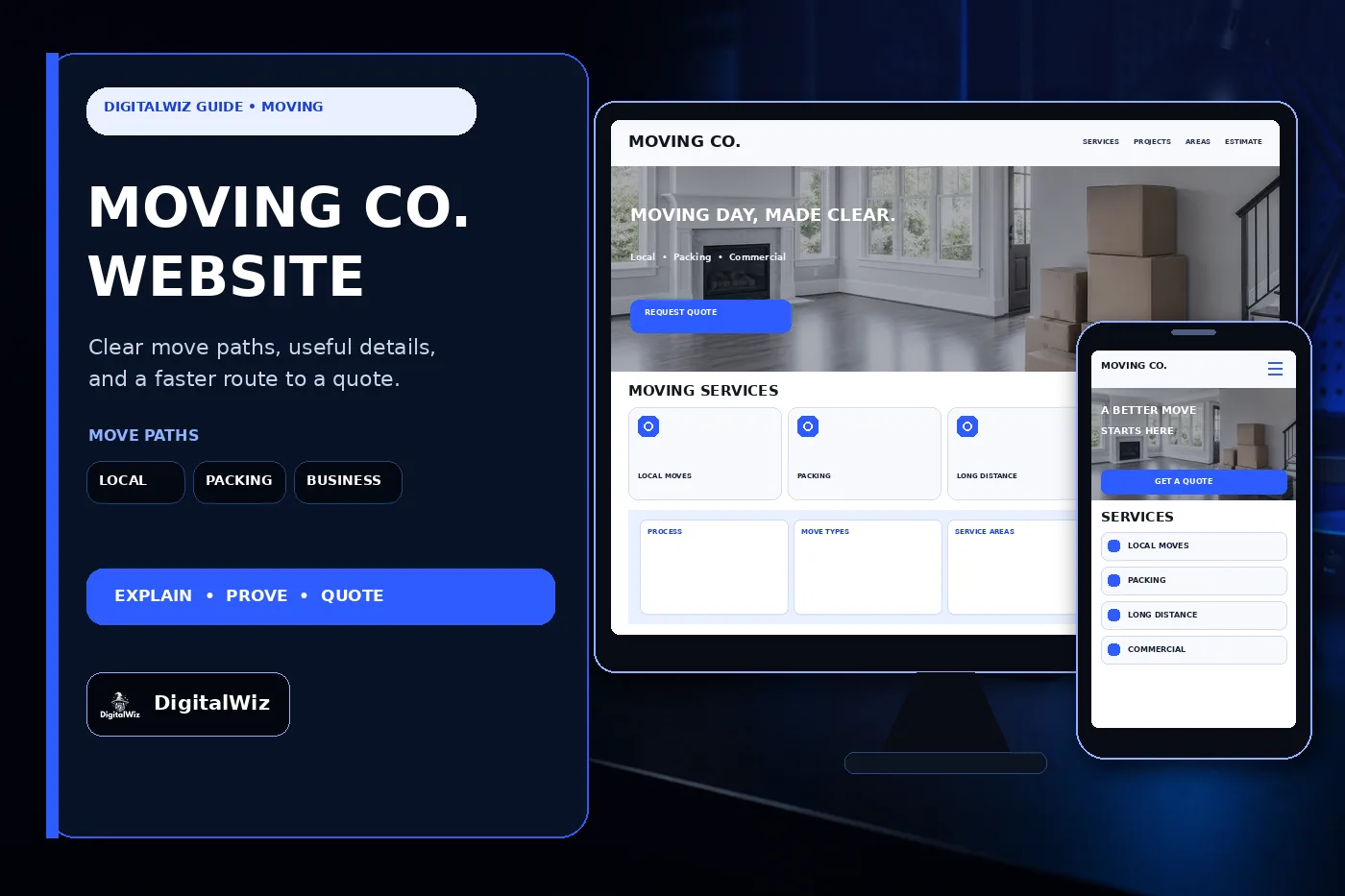
Real project examples can demonstrate fit without exposing customers. Use permission-safe photos and general context such as move type, broad area, property type, access challenge, packing scope, crew plan, and completed responsibility. Never invent customer names, ratings, damage-free percentages, on-time rates, review counts, savings, inventory values, move volume, or before-and-after results. A neutral conceptual website mockup can show page structure, but it is not client proof.
- Make the legal business identity, provider role, authority, and verification path easy to find.
- Explain the real estimate-to-delivery process, including documents, changes, payment, and issue reporting.
- Use permission-safe move examples with useful scope and access context but no private addresses or inventories.
- Avoid invented rankings, reviews, rates, guarantees, customer totals, damage claims, or delivery claims.
Give pricing context without promising an imaginary move
Moving prices can change with origin and destination, route, move date, shipment size, crew and hours, home type, stairs, elevators, long carries, parking, access windows, packing materials, packing labor, disassembly, specialty items, storage, additional stops, waiting time, travel, fuel treatment, valuation choices, and services added after the estimate. A single low hourly number is not useful when its minimums and extra charges are hidden.
The website can still make pricing clearer. Explain whether local work is estimated by time, crew, inventory, a written scope, or another approved method. List the information needed for an accurate quote and disclose common minimums or charges when they are stable. For larger, commercial, specialty, or interstate work, say when a walkthrough, inventory, weight, documentation, or binding estimate discussion is required.
Keep payment and protection language plain. State accepted payment methods, deposit rules, when balances are due, how added work is approved, and where cancellation or rescheduling terms live. Explain the company's actual liability or valuation options without casually calling every option insurance. Customers should receive the controlling terms in the proper estimate, order, bill of lading, tariff, contract, or other required document—not rely on a marketing summary alone.
- Explain route, inventory, labor, access, packing, specialty, storage, timing, and extra-stop cost drivers.
- Publish rates, ranges, minimums, travel charges, deposits, or packages only with current assumptions.
- State how changed inventory, access, waiting, packing, or added services affect the written estimate.
- Keep payment, cancellation, liability, valuation, claims, and contract language accurate and distinct.
Make the quote form useful on a phone, then track lead quality
A moving quote form should collect enough information to route the request without forcing someone to inventory an entire home on a phone. Ask for name, phone, email, origin and destination ZIP codes, move date or range, move type, property type and size, floors, stairs or elevators, parking or loading concerns, packing needs, storage needs, specialty items, and a safe way to provide an inventory, photos, or walkthrough later.
Route inquiries where the workflow changes. A studio move across Charlotte, a large home, interstate request, office relocation, packing-only job, labor-only request, piano, storage transfer, last-minute move, and out-of-area lead should not all land in one inbox. Confirmation copy should explain the next review step. It should not promise crew availability, an arrival time, final price, delivery date, or item eligibility before the company checks the details.
Track the lead beyond the form. Record source, campaign, landing page, route, move type, date, property size, estimate type, qualified quote, booked move, revenue, cancellations, and lead quality when the sales process supports it. That shows whether local pages bring bookable routes, packing ads reach customers who want that help, or broad traffic keeps falling outside the calendar and territory.
Test the entire path on a real phone. Tap-to-call should work. Date fields and uploads should be usable. Forms must reach the right estimator, and response wording should match actual office hours. Want a clear look at your service pages, local visibility, quote path, and tracking gaps? Run a free BizScore audit.
- Ask for route, timing, property, access, inventory level, packing, storage, and specialty-item context.
- Route local, interstate, commercial, packing, labor-only, specialty, urgent, and out-of-area requests.
- Track source and landing page through qualification, estimate, booked move, service type, value, and lead quality.
- Use the findings to improve pages, ads, forms, territory, scheduling, estimate handoffs, and follow-up.