What Pages Should a Home Inspection Company Website Have?
A home inspection website should separate buyer, pre-listing, new-construction, warranty, specialty, service-area, sample-report, pricing, FAQ, and booking paths.
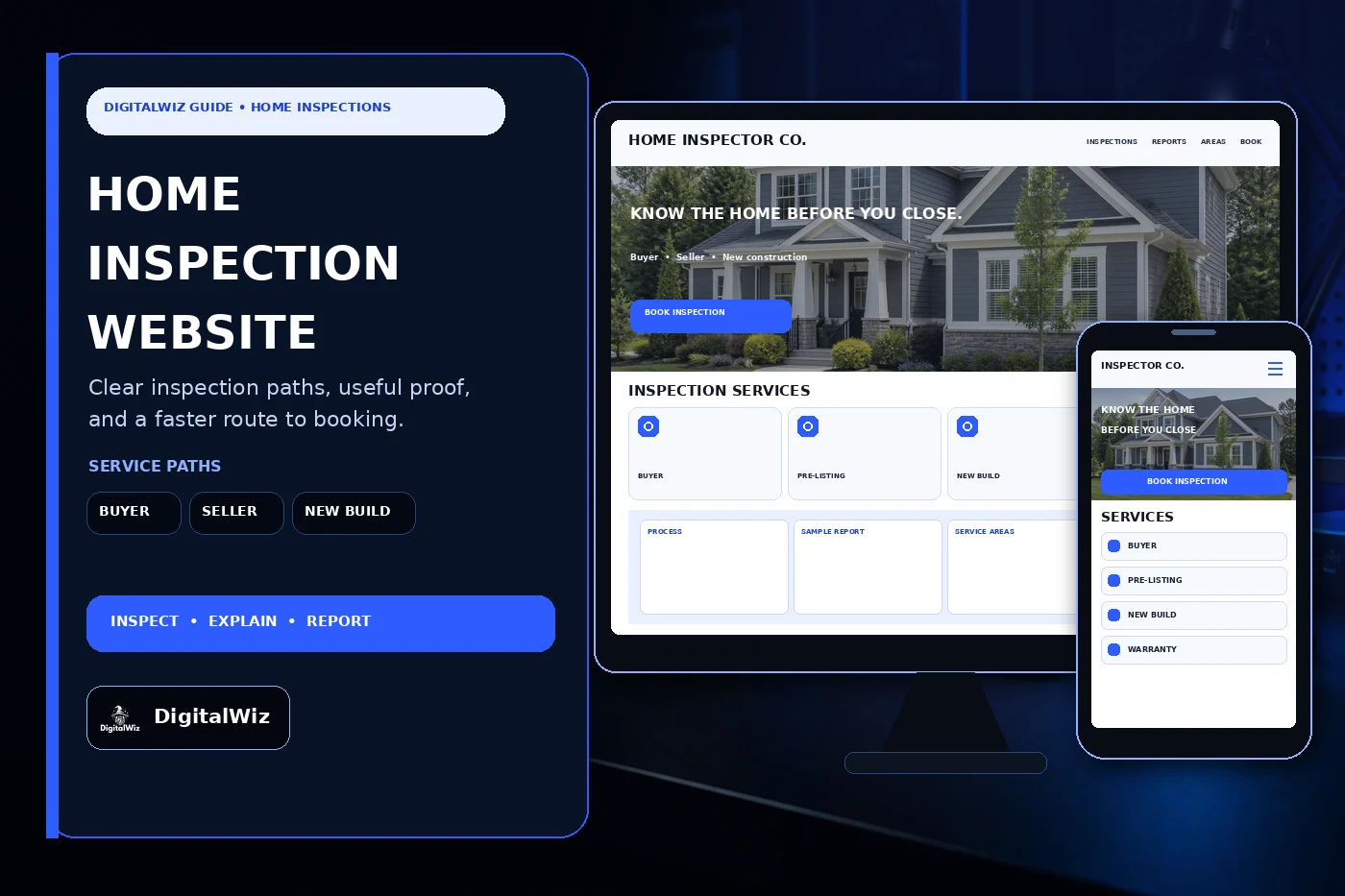
The direct answer
A home inspection company website should have focused pages for buyer inspections, pre-listing inspections, new-construction phase or final inspections when offered, warranty inspections, commercial or specialty work within scope, service areas, the inspection process, inspector credentials, a sample report, pricing context, FAQs, and booking. One general inspection page leaves a buyer guessing about timing, property type, scope, report delivery, and the next step.
Start with the inspections the company is licensed, insured, equipped, and willing to perform. A Charlotte-area inspector focused on existing single-family homes needs a different website path than a multi-inspector firm handling new construction, condos, older homes, small commercial properties, pools, septic systems, wells, radon, mold sampling, sewer scopes, thermal imaging, or ancillary services. Separate those paths whenever credentials, equipment, agreements, scheduling, laboratories, or report language change.
Each page should help the client confirm fit before they book. Explain the property and inspection type, what information the office needs, the normal agreement and payment steps, who should attend, what the inspection covers at a high level, how findings are reported, and what happens next. That gives the website, Search Visibility, and Paid Ads Management useful landing pages instead of sending every visitor to one vague homepage.
- Create a focused page for every meaningful inspection type and property category the company actually supports.
- Explain booking, agreement, access, inspection, report delivery, questions, and follow-up.
- Publish accurate licenses, service limits, fees, availability, ancillary-service terms, and report expectations.
- Track calls and forms through booked inspection, completed appointment, service type, territory, value, and lead quality.
Separate buyer, seller, new-construction, and specialty inspection paths
Buyer inspections deserve a clear page. Explain the property types served, the information needed from the contract or listing, how access is arranged, when the agreement must be signed, whether clients may attend, how long the appointment window is communicated, and when the report is normally delivered. Keep the promise tied to the company's real workflow rather than advertising a universal same-day report or instant appointment that the schedule cannot support.
Pre-listing work is a different conversation. Sellers may want time to understand visible conditions before marketing a property, but the page should not imply that an inspection guarantees a smooth sale, predicts a buyer's inspector, or eliminates disclosure duties. New-construction pages should separate phase inspections, pre-drywall reviews, final inspections, and warranty visits only when those services are genuinely offered. State what plans, builder access, scheduling notice, utilities, and site readiness are needed.
Ancillary services need their own accurate pages. Radon testing, mold or indoor-air sampling, sewer scopes, pools and spas, wells, septic systems, termite or wood-destroying insect work, thermal imaging, drone use, detached structures, commercial properties, and re-inspections can involve different qualifications, equipment, labs, agreements, and limitations. Say whether the inspector performs the service, coordinates another provider, or does not offer it. Do not hide that distinction inside a package name.
- Buyer page: property types, access, agreement, attendance, inspection scope, report timing, and follow-up.
- Pre-listing page: purpose, preparation, limitations, report use, repair decisions, and disclosure boundaries.
- New-construction page: supported phases, scheduling notice, site readiness, builder access, documents, and deliverables.
- Specialty pages: provider, credentials, equipment, lab or third-party role, limitations, fees, and report format.
Explain the scope, standards, agreement, and report before the appointment
Inspection buyers are comparing more than a price. Give them a plain-language overview of the visual, accessible systems and components the service reviews, then link to the current agreement and applicable standards instead of pasting a checklist that may become incomplete. Clarify common access limits around locked areas, stored belongings, finished surfaces, unsafe conditions, weather, utilities, roofs, crawl spaces, attics, and systems that are shut down or not operating normally.
North Carolina companies should make licensure easy to verify. The North Carolina Home Inspector Licensure Board says it regulates people who perform home inspections for compensation and provides licensing, standards-of-practice, complaint, and consumer resources. Link to the board, identify the legal business and licensed inspectors accurately, and keep the site aligned with the current rules and signed agreement. A marketing page should not rewrite the standard of practice from memory.
Show what a useful report looks like. A sample can demonstrate organization, photographs, location notes, condition descriptions, recommendations, summaries, and navigation without exposing a real client's address or private details. Explain how clients receive the report, how long access lasts, whether agents may receive it with authorization, how questions are handled, and what a re-inspection does or does not verify. Never imply that the report is a warranty, appraisal, code-compliance certificate, engineering opinion, or guarantee that no concealed issue exists.
- Summarize the inspection's visual and accessible scope, then point to the controlling standards and agreement.
- Explain access, safety, weather, utility, occupancy, storage, roof, crawl-space, attic, and system limitations.
- Publish a privacy-safe sample report that matches the report clients actually receive.
- Keep inspection, appraisal, code enforcement, engineering, environmental testing, and warranty roles distinct.
Build trust with verifiable credentials, a real process, and honest proof
An inspector profile should answer practical questions. Name the licensed inspector or team, legal business, service territory, insurance information available for review, relevant certifications, continuing education, languages, property experience, and ancillary qualifications accurately. Attribute every credential to the person or company that holds it. One member's certification should not become a claim about the entire office.
Then show the actual process from start to finish: inquiry, property and timing review, quote, agreement, payment, agent or seller coordination, access confirmation, inspection, client walkthrough when offered, report delivery, questions, and any later re-inspection. Buyers are often working against contract deadlines, so confirmation copy must distinguish a request from a booked appointment. State who confirms access and what happens if the property is not ready.
Use real, permission-safe proof. A project example can identify the general property type, approximate age range, inspection type, accessible systems reviewed, unusual access or scheduling context, report format, and follow-up without revealing an address, occupant, alarm detail, lockbox code, defect list, contract term, or client identity. Never invent testimonials, ratings, issue counts, money saved, defect percentages, closing outcomes, inspection volume, response times, or guarantees. A neutral website mockup illustrates structure; it is not a client case study.
- Publish the legal identity, license verification, insurance context, inspector bios, and service territory clearly.
- Describe the real request-to-report workflow, including agreement, payment, access, attendance, and follow-up.
- Use permission-safe examples and sample reports with all private property and client details removed.
- Avoid invented reviews, savings, issue totals, rankings, turnaround claims, closing outcomes, and guarantees.
Give pricing, scheduling, and service-area context without making promises
Home inspection pricing can change with property type, size, age, location, occupied or vacant status, foundation and roof access, outbuildings, number of systems, utilities, inspection type, travel, urgency, report requirements, and ancillary services. New construction, older properties, multi-unit buildings, small commercial spaces, pools, septic systems, wells, radon, mold sampling, sewer scopes, and re-inspections should not be squeezed into one unexplained starting price.
The site can still make cost easier to understand. Publish exact fees or ranges when the assumptions are stable and maintained. Otherwise, explain the details needed for a firm quote, which services are separate, when payment is due, how cancellations or rescheduling work, and what changes if the property details are incomplete. Do not advertise a package discount without showing what each package includes and which services depend on property conditions or a third party.
Service-area pages should reflect drive time, inspector calendars, property types, ancillary equipment, laboratory pickup or shipping, and contract deadlines. A useful Charlotte-area page can explain the neighborhoods or surrounding towns served, normal booking process, property context, and local office coverage without pretending every ZIP code has immediate availability. Keep urgent language accurate. A request form is not an appointment until the office confirms it.
- Explain the largest property, access, age, location, inspection-type, scheduling, and ancillary-service cost drivers.
- Publish fees, ranges, packages, travel terms, and cancellation rules only with clear current assumptions.
- State what is included, optional, third-party, property-dependent, or quoted after review.
- Match service-area and turnaround language to real inspector availability and report workflow.
Make booking work on a phone, then track which leads become inspections
A home inspection form should collect enough information to route the request without forcing a buyer to know every property detail. Ask for name, phone, email, property address, buyer or seller role, inspection type, property type, approximate size and age when known, contract deadline, preferred dates, occupied or vacant status, agent or access contact, ancillary services of interest, and safe optional documents. Mark unknown fields as optional instead of blocking the request.
Route inquiries where the workflow changes. An existing-home buyer, pre-listing seller, pre-drywall request, final new-construction inspection, warranty deadline, condo, older home, small commercial property, radon test, sewer scope, re-inspection, and out-of-area request should not all land in one undifferentiated inbox. Confirmation copy should explain the review, quote, agreement, payment, and appointment-confirmation steps without promising availability or report delivery before the office checks the details.
Track the lead beyond the first form. Record source, campaign, landing page, inspection type, property type, territory, deadline, quoted service, booked appointment, completed inspection, ancillary services, revenue, cancellation, referral source, and lead quality when the workflow supports it. That shows whether buyer pages bring bookable inspections, paid search reaches the right service area, or broad traffic keeps arriving with unsupported property types and deadlines.
Test the entire path on a real phone. Tap-to-call should work, date fields should be usable, uploads should have a fallback, and the request must reach the right scheduler. Want a clear look at your inspection pages, local visibility, booking flow, and tracking gaps? Run a free BizScore audit.
- Ask for property, inspection type, role, size and age if known, deadline, access, timing, and ancillary-service context.
- Route buyer, seller, new-construction, warranty, specialty, commercial, urgent, and out-of-area requests appropriately.
- Track source and landing page through quote, booking, completion, service mix, value, referral, and lead quality.
- Use the findings to improve pages, ads, forms, service areas, scheduling, confirmations, and follow-up.