What Pages Should a Glass and Shower Door Company Website Have?
A glass and shower door company website should separate frameless enclosures, sliding doors, glass options, hardware, mirrors, repair limits, projects, process, service areas, and quote paths.
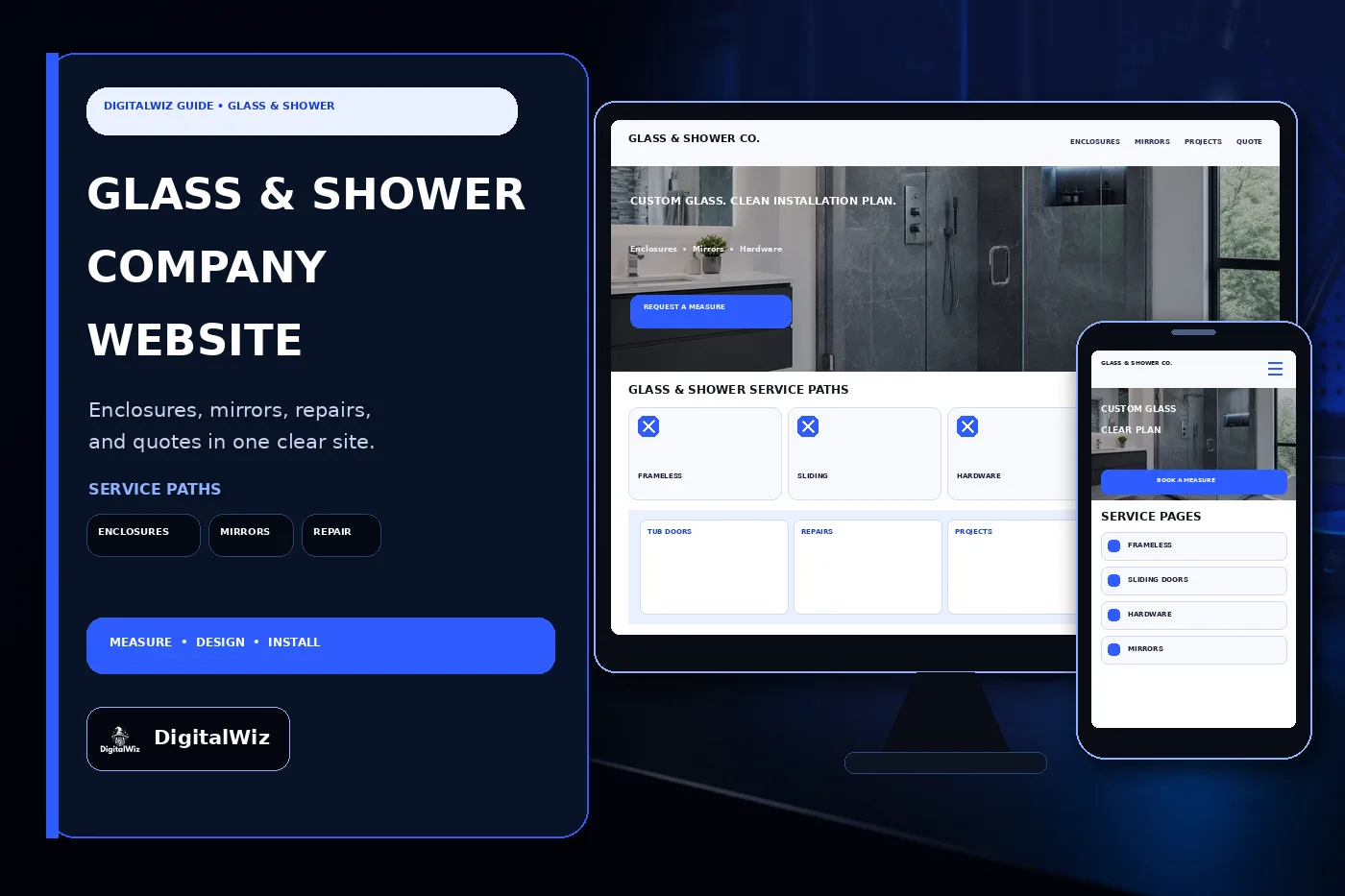
The direct answer
A glass and shower door company website should have focused pages for frameless shower enclosures, semi-frameless and framed systems when offered, sliding and hinged doors, tub enclosures, glass choices, hardware and finishes, custom mirrors, other residential or commercial glass services, the measure-to-install process, real projects, service areas, pricing context, care, warranties, FAQs, and quote requests. Repairs and replacement parts need their own route if the company handles them.
Do not make a homeowner decode one giant gallery. Someone planning a new frameless enclosure has different questions from a customer with a dragging door, damaged sweep, loose handle, chipped panel, failed mirror, or opening that is not ready to measure. The website should help each visitor understand whether the job fits, what information starts the conversation, and what still has to be confirmed in person.
That structure gives the website, Search Visibility, and Paid Ads Management useful destinations. A search for frameless shower doors should reach a focused enclosure page. An ad for custom mirrors should not send people to a generic homepage dominated by one bathroom photo.
Keep the promise grounded. A website can explain system types, design choices, normal preparation, the company’s process, and the factors that affect price. It cannot confirm final glass dimensions, safety-glazing requirements, door swing, hardware support, waterproofing, wall suitability, lead time, or a binding price from one phone photo.
- Separate frameless, framed or semi-frameless, sliding, hinged, tub, mirror, repair, project, service-area, care, warranty, and quote paths according to the real offer.
- Show what customers can choose online and what still requires field measurement, opening review, product selection, fabrication approval, or another trade.
- Use real project context instead of a gallery full of unexplained close-ups.
- Track each lead from source and landing page through qualification, measure, proposal, approval, installation, final value, and lead quality.
Build pages around enclosure types and glass options
Frameless enclosures deserve a dedicated page because customers are buying more than an open-looking piece of glass. Explain the configurations the company actually designs and installs: single doors, door-and-panel layouts, corner enclosures, inline enclosures, neo-angle layouts, steam applications when supported, and fixed splash panels. Show how opening shape, curb or curbless design, walls, door swing, support, nearby fixtures, ventilation, and water direction enter the conversation.
Sliding systems need a separate page. Bypass, barn-style, rolling, header-supported, or other systems have different hardware, clearances, access, cleaning, glass, and opening requirements. Publish only systems the company can source, fabricate, install, adjust, and support. A product photo from a supplier should not imply that every opening accepts the same track or that every finish remains available.
Give framed and semi-frameless options a useful place when they are genuine offers. Explain the broad differences in visible metal, door construction, configuration flexibility, maintenance, and budget without declaring one style universally better. Tub enclosures should also have their own path because tub decks, wall surrounds, faucet locations, children’s use, access, swing, sliding clearance, and water containment can change the choice.
Glass pages should organize decisions without turning the site into a fake configurator. Cover supported thicknesses, clear and patterned choices, privacy options, low-iron glass when offered, protective treatments, edge work, notches, holes, and fabrication limits at a high level. Tie exact dimensions, performance, coating, and compatibility claims to the selected system and current manufacturer or fabricator documentation.
- Frameless pages: configuration, opening, support, swing, water direction, hardware, glass, access, ventilation, and cleaning.
- Sliding pages: track or roller system, clearances, entry width, bypass overlap, hardware, maintenance, and supported openings.
- Framed, semi-frameless, and tub pages: visible metal, layout, finishes, containment, access, and system-specific limits.
- Glass pages: current choices, thickness, privacy, appearance, treatments, fabrication, edge work, and approval boundaries.
Explain hardware, mirrors, repairs, and scope limits
Hardware deserves more than a row of finish swatches. Show the hinge, handle, pull, knob, channel, clamp, header, towel bar, support bar, and accessory families the company can currently supply. Explain that finish appearance can vary by manufacturer, batch, lighting, cleaning, and surrounding fixtures. If matching existing plumbing hardware is a goal rather than a guaranteed match, say so before the measure appointment.
Custom mirrors need a focused page when they are part of the business. Cover bathroom mirrors, vanity walls, gym or studio mirrors, decorative shapes, framed and frameless options, cutouts, edge finishes, mounting methods, backing conditions, electrical and lighting coordination, delivery access, and removal of existing mirrors. Keep medicine cabinets, antiqued glass, backlit mirrors, commercial walls, or specialty fabrication off the menu unless the team really handles them.
Repair copy has to be unusually clear. A sweep, seal, handle, roller, guide, hinge adjustment, recaulking within scope, or supported replacement part may be serviceable. Scratched, chipped, cracked, tempered, obsolete, mismatched, badly measured, or poorly supported glass may require replacement or fall outside the company’s scope. Never encourage visitors to manipulate loose or damaged glass for a better photo. Give them a safe phone path and ask them to keep people away from an unstable panel.
Publish trade boundaries beside the services. Tile, stone, curbs, waterproofing, framing, wall reinforcement, plumbing fixtures, electrical work, ventilation, paint, drywall, demolition, remediation, and structural changes may need to be complete before final measurement or handled by another qualified contractor. The glass company’s site should say what it inspects, what it installs, and what must be corrected by others.
- Hardware pages: supported systems, finishes, pulls, hinges, channels, clamps, headers, accessories, availability, and matching expectations.
- Mirror pages: size, shape, edge, backing, cutouts, lighting, mounting, removal, access, delivery, and specialty scope.
- Repair pages: safe intake, supported adjustments and parts, obsolete hardware, damaged glass, replacement triggers, and service minimums.
- Scope pages: tile, curb, waterproofing, framing, blocking, plumbing, electrical, ventilation, finishes, demolition, and work by others.
Show the real measurement, fabrication, and installation process
A strong process page follows the actual job. Start with the inquiry and service-area check. Then show safe photos or plans, preliminary fit review, showroom or product discussion when used, opening-readiness check, field measurement, configuration and finish selections, written proposal, drawing or specification approval, deposit, fabrication, scheduling, delivery, installation, adjustment, cleanup, walkthrough, care instructions, and warranty handoff.
Measurement is where clear expectations matter. State which tile, stone, curb, wall, ceiling, plumbing, and finish work must be complete before the final visit. Explain who needs to approve door swing, panel layout, hardware, finish, glass, notches, cutouts, support, and drawings. Homeowner dimensions can help with an early conversation, but custom glass should not be fabricated from an unverified sketch unless that is genuinely the company’s documented process.
Safety-glazing language should stay accurate and product-specific. Federal rules for architectural glazing appear in 16 CFR Part 1201, while project requirements can also involve adopted codes, the selected product, the opening, and local review. The website should explain that compliant materials and installation details are confirmed for the actual project—not use a generic ‘tempered glass’ badge as a substitute for documentation.
Installation copy should cover access, floor and fixture protection, glass handling, work-zone control, hardware installation, sealant, adjustment, cleanup, curing or return-to-use instructions, and the customer walkthrough. Do not promise that every enclosure is leakproof under every spray direction or bathroom condition. Explain the intended water-management design, normal limitations, maintenance, and what to do if the customer notices a problem.
- Map inquiry, fit review, readiness, measurement, selections, proposal, approval, fabrication, installation, adjustment, cleanup, and handoff.
- State what must be finished before final measurement and which dimensions, layouts, finishes, and drawings require approval.
- Tie glass, hardware, compliance, and installation claims to the selected system and actual opening.
- Explain access, protection, sealant, cure time, water-management expectations, care, callbacks, and changed conditions.
Use projects, pricing, care, and warranties responsibly
Project pages should work like compact case studies. Show the broad room or property type, enclosure configuration, glass choice, hardware family and finish, opening or access challenge, adjacent work completed by others, measurement and approval path, installation details, and finished result. Include a whole-space view plus useful details of hinges, channels, corners, handles, curb transitions, and mirror edges. That helps buyers compare real work instead of guessing from a wall of nearly identical showers.
Protect the customer while showing the craft. Remove addresses, faces, human reflections, family photographs, medications, documents, valuables, alarm details, and neighboring-property information. Never invent reviews, ratings, project totals, years in business, leak claims, breakage claims, lead times, prices, warranty outcomes, safety certifications, or before-and-after stories to make a template feel complete.
Pricing pages can explain what moves the proposal: enclosure type, number and size of panels, glass choice and thickness, fabrication, edge work, holes and notches, hardware system and finish, supports, opening condition, measurement, drawings, removal, disposal, access, stairs, protection, delivery, installation, travel, tax, and work by other trades. Publish ranges only when the included assumptions are clear and someone keeps them current.
Care and warranty pages should be specific to the installed glass, hardware, protective treatment, sealant, and written agreement. Cover approved cleaners and tools, hard-water buildup, coatings, sweeps and seals, hinge or roller adjustments, impacts, chips, scratches, movement, tile or curb changes, plumbing leaks, misuse, maintenance, service requests, manufacturer coverage, and workmanship. A broad ‘lifetime warranty’ graphic is not enough.
- Caption real projects with configuration, glass, hardware, finish, opening, access, approvals, scope, and completed details.
- Never fabricate customers, reviews, ratings, certifications, safety claims, project totals, lead times, prices, outcomes, or warranties.
- Explain the glass, fabrication, hardware, opening, removal, access, delivery, labor, travel, and adjacent-trade cost drivers.
- Separate glass, hardware, coating, sealant, workmanship, maintenance, damage, movement, manufacturer, and other-trade coverage.
Create local quote paths and measure qualified work
Service-area pages should match where the company can measure, deliver, install, adjust, and provide warranty service. Charlotte, Matthews, Mint Hill, Indian Trail, Monroe, Waxhaw, Concord, Huntersville, and nearby communities can involve different travel, parking, gated access, high-rise or multifamily rules, new-construction schedules, remodeling coordination, delivery paths, and project minimums. Do not create fake showrooms or clone one thin paragraph across every city.
The quote form should collect enough context to route the request: name, phone, email, project address or ZIP code, shower enclosure or mirror, new construction or remodel, opening type, tile and curb status, desired configuration, glass and finish interest, approximate timing, safe photos taken from outside the opening, plans when available, access notes, and whether damaged glass is present. ‘Not sure’ should be a valid answer.
Use different paths when the workflow changes. New custom enclosures, replacement doors, tub sliders, mirror projects, builder packages, commercial glazing, supported repairs, warranty concerns, and unstable glass should not all enter one generic form. Confirmation copy should say whether the request was received, is under review, or has a confirmed appointment. It should not imply that a field measure, fabrication slot, installation date, or emergency visit is booked unless it really is.
Then track which marketing produces the right work. Record source, campaign, landing page, location, project type, construction stage, measure, proposal, approval, fabrication, installation, final value, loss reason, service request, and lead quality when the operation supports it. DigitalWiz builds contractor websites, search visibility, and paid-ad systems around the real quoting and installation process. Want a practical list of the page, local-search, quote, and tracking gaps worth fixing first? Run a free BizScore audit.
- Build local pages around real measurement, delivery, installation, service, access, scheduling, travel, and project-minimum capacity.
- Ask for project type, location, stage, opening, selections, timing, safe photos, and access without pretending the form can finalize the design.
- Test tap-to-call, uploads, confirmations, CRM delivery, appointment routing, repair triage, and mobile layout end to end.
- Track source and landing page through qualification, measure, proposal, approval, fabrication, installation, value, loss reason, and lead quality.