What Pages Should a Dumpster Rental Company Website Have?
A dumpster rental website should separate container sizes, project types, accepted materials, placement, delivery, pricing, service areas, FAQs, and quote paths.
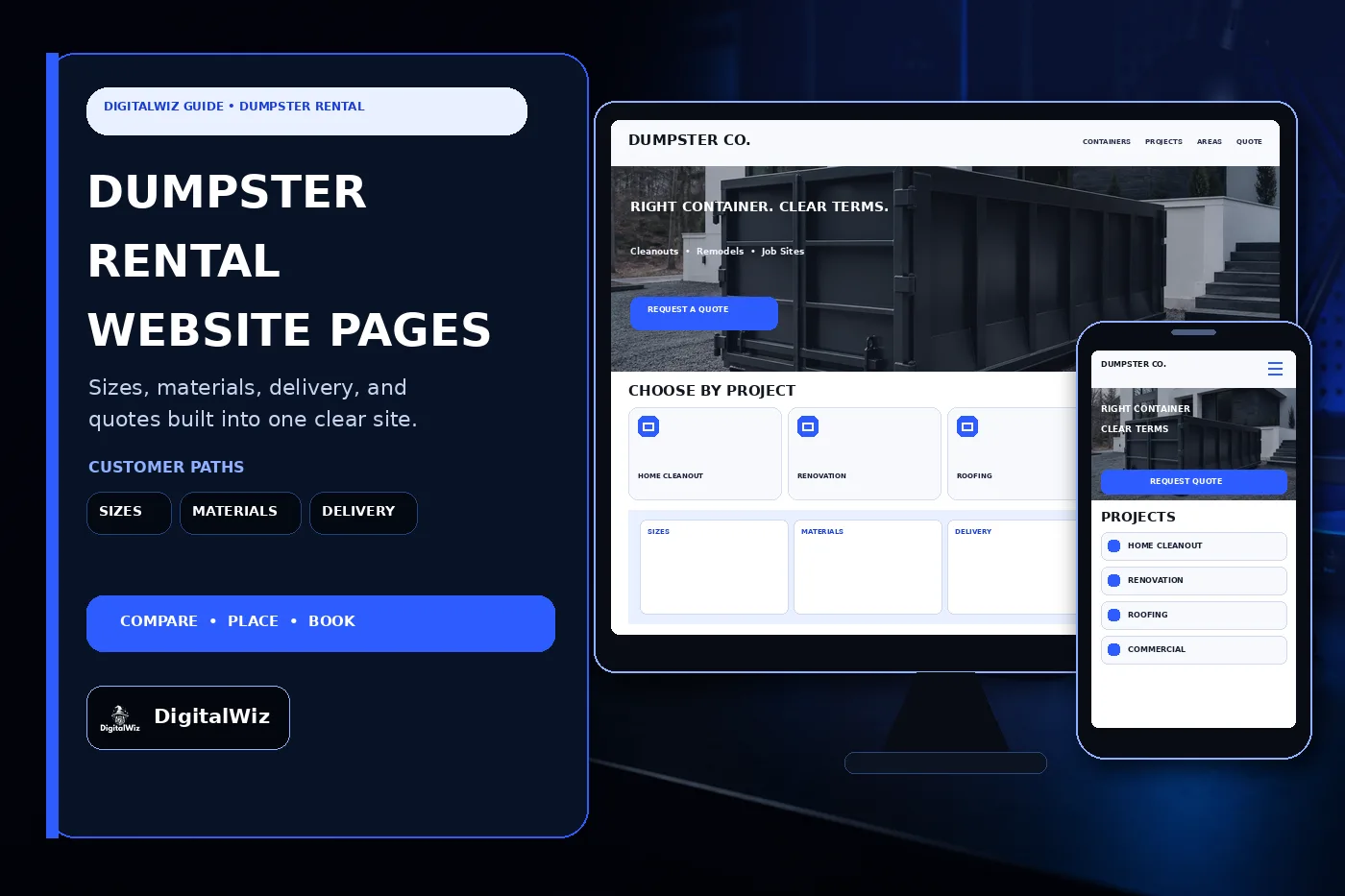
The direct answer
A dumpster rental company website should have focused pages for container sizes, residential and contractor projects, accepted and prohibited materials, delivery and pickup, placement requirements, service areas, pricing context, rental terms, FAQs, and quote requests. One generic rentals page makes a customer guess which container fits, where it can sit, what can go inside, and what the final bill may include.
Start with the rentals the company can actually deliver, haul, and dispose of. A Charlotte-area operator serving home cleanouts needs a different website path than a roll-off company handling roofing debris, remodeling waste, concrete, commercial construction, recurring accounts, or restricted job sites. Separate those paths whenever container inventory, truck access, material rules, weight, disposal facilities, permits, scheduling, or account terms change.
Each page should help someone confirm fit before requesting a container. Show the available sizes, useful project examples, accepted materials, loading limits, placement needs, service territory, delivery process, quote assumptions, and confirmation step. That gives the website, Search Visibility, and Paid Ads Management clear landing pages instead of sending every search and ad click to one vague homepage.
- Create a useful page for every container type, project category, material stream, and customer group the company serves.
- Explain delivery access, placement, loading, rental period, pickup, disposal, and changed-order terms in plain language.
- Publish current service areas, inventory limits, accepted materials, prohibited items, quote assumptions, and confirmation steps.
- Track calls and forms through qualified quote, scheduled delivery, completed rental, project type, territory, value, and lead quality.
Separate container sizes and project types
A size page should do more than list cubic yards. Give every available container its own clear section with exterior dimensions, capacity limits, door style, delivery footprint, loading height, weight allowance when applicable, and common uses. Use real photographs of the company's actual containers when possible. A size comparison can help, but it should never imply that every kitchen remodel, roof, estate cleanout, or demolition project creates the same volume or weight.
Project pages translate the equipment into a buying decision. Home cleanouts, moving, remodeling, roofing, landscaping, concrete or masonry, commercial construction, property management, and recurring business service can all need different container sizes and material rules. Explain which projects the company accepts, which need a dedicated load, and when a customer should call with measurements, photos, material estimates, or a contractor's scope before choosing.
Keep heavy materials separate. Concrete, brick, block, dirt, asphalt, shingles, plaster, and mixed construction debris can reach weight limits long before a container looks full. If the company offers clean-load or heavy-material containers, state the accepted mix, fill line, size restrictions, and contamination rules. Never suggest that a large roll-off can be filled to the top with dense material unless the operator's equipment, disposal path, and legal weight limits support it.
- Size pages: real dimensions, delivery footprint, door, loading height, capacity context, limits, and common project fit.
- Residential pages: cleanouts, moves, renovations, roofing, yard work, and property preparation actually supported.
- Contractor pages: jobsite access, project schedules, exchanges, purchase orders, material streams, and account requirements.
- Heavy-material pages: approved materials, dedicated-load rules, fill limits, contamination, weight, and disposal terms.
Put materials, placement, and access rules where customers can find them
The accepted-materials page is one of the most important pages on the site. Group materials in plain language and keep the list current by container and disposal route. Then place prohibited and conditional items beside it. Paint, chemicals, fuel, batteries, tires, appliances, electronics, refrigerants, asbestos-containing material, medical waste, pressurized cylinders, liquids, and other restricted items should never be buried inside a long terms page. Give customers a safe next step when they are unsure.
North Carolina disposal and facility rules matter here. The NC DEQ Solid Waste Section explains that the state's Solid Waste Program regulates non-hazardous solid waste through guidance, permitting, environmental monitoring, compliance evaluation, and enforcement. A rental company should keep its material guidance aligned with the facilities and programs it actually uses rather than copying a nationwide list that may not match local acceptance rules.
Placement deserves its own page too. Explain the level, firm, accessible space a delivery truck and container require; overhead clearance; gates; turns; slopes; soft ground; buried utilities; septic systems; landscaping; pavement protection; association or property-manager approval; and whether a container may sit in a public right-of-way. Charlotte maintains a current Right-of-Way permitting hub. Link customers to the controlling local source and state clearly who is responsible for approval. Do not promise that a driveway, curb lane, alley, or jobsite can accept a container from a photo alone.
- List accepted, conditional, prohibited, dedicated-load, and facility-specific materials by the container options offered.
- Give uncertain or restricted items a clear review path instead of inviting customers to hide them in a load.
- Explain surface, clearance, access, gate, turn, slope, utility, septic, pavement, property, and right-of-way considerations.
- State who checks permits, association rules, property approval, site protection, and final placement before delivery.
Explain the quote, weight, rental period, and extra charges before checkout
Dumpster pricing can change with container size, material type, included weight, disposal charges, rental period, delivery distance, taxes, fuel treatment, permit or right-of-way costs, exchanges, wait time, inaccessible placement, relocation, overloaded containers, prohibited material, dry runs, and weight beyond the allowance. A low base price is not useful if the page hides the assumptions that decide the invoice.
The site can still make cost easier to understand. Publish exact prices or ranges only when the company can keep them current and define what they include. Otherwise, show the information needed for a written quote: delivery ZIP code, project type, material, estimated volume or weight, preferred size, placement, delivery date, rental period, exchange needs, and pickup timing. Explain how disposal weight is measured and when the customer receives any scale ticket or overage detail.
Separate a quote request from a confirmed order. Inventory, truck routes, weather, disposal-facility hours, site access, permits, and the prior stop can affect delivery. Confirmation copy should identify who reviews the request, how the date and placement are approved, when payment is due, how pickup is requested, and what happens when the container cannot be safely delivered or hauled. Avoid universal same-day claims unless the operation can honor them across the advertised territory.
- Explain size, material, weight allowance, disposal, distance, time, exchange, access, permit, tax, and changed-order cost drivers.
- Publish prices only with clear inclusions, assumptions, exclusions, overage treatment, and expiration dates.
- Distinguish a request, preliminary quote, paid order, scheduled delivery, completed placement, pickup request, and final invoice.
- State payment, cancellation, failed-delivery, relocation, overload, contamination, damage, extension, and pickup terms clearly.
Build local trust with a real delivery process and permission-safe proof
A useful service-area page reflects truck routes and disposal realities, not just a list of cities. Residential rentals, heavy-material loads, contractor exchanges, commercial accounts, and same-day requests may have different boundaries or lead times. Charlotte, Matthews, Mint Hill, Indian Trail, Monroe, Concord, and nearby communities can also bring different traffic, access, right-of-way, facility, and scheduling constraints. Do not clone one thin paragraph across every town.
Show the working process from start to finish: the customer chooses a project and size, submits the address and material, the office confirms coverage and inventory, placement and access are reviewed, the quote and terms are accepted, delivery is scheduled, the driver approves final placement, the customer loads within the rules, pickup is requested, the company hauls and weighs or disposes of the load, and the final invoice or receipt is issued. Clear steps prevent more confusion than a gallery of anonymous containers.
Use real proof carefully. A project example can identify the container size, broad area, project type, material stream, placement challenge, rental period, exchange pattern, and completed service when the customer approves it. Remove addresses, access codes, personal property, documents, license plates, workers, neighboring homes, and anything sensitive. Never invent reviews, star ratings, delivery times, load counts, diversion percentages, savings, years in business, disposal outcomes, or customer totals.
- Describe real residential, contractor, commercial, heavy-material, exchange, and pickup coverage by service area.
- Show the request-to-review-to-delivery-to-pickup workflow the office and drivers genuinely follow.
- Use authorized container and project photos with addresses, people, property details, and identifying information removed.
- Avoid fake ratings, delivery times, load counts, savings, disposal claims, affiliations, certifications, and guarantees.
Make quoting fast on a phone, then track the rentals that qualify
A dumpster request form should collect enough information to route the order without asking a homeowner to calculate cubic yards on a phone. Ask for name, phone, email, delivery address or ZIP code, project type, material, estimated amount, preferred container size if known, desired delivery date, rental period, placement surface, gates or access concerns, permit status when relevant, exchange needs, and safe optional site photos. Mark uncertain details as optional and let the office help.
Route leads where the workflow changes. A household cleanout, roofing job, concrete load, occupied commercial site, recurring contractor account, narrow driveway, public-street placement, urgent exchange, restricted material, and out-of-area request should not enter one undifferentiated queue. The confirmation should explain review and follow-up without promising a container, date, placement, price, or material approval before a qualified person checks the details.
Track more than form submissions. Record source, campaign, landing page, project type, material, container size, territory, qualified status, quote, booked delivery, exchange, pickup, final value, cancellation, and lead quality when the operation supports it. That shows whether size pages help customers choose, paid search reaches profitable routes, or broad keywords keep producing materials and placements the company cannot accept.
Test the whole route on a real phone. Tap-to-call should reach the right line, date fields must be usable, photo uploads need a fallback, and every request needs a visible handoff. Want a practical look at your rental pages, local visibility, quote flow, and tracking gaps? Run a free BizScore audit.
- Ask for project, material, amount, location, timing, size if known, access, placement, permit, and exchange context.
- Route residential, contractor, heavy-material, commercial, recurring, restricted, urgent, and out-of-area inquiries appropriately.
- Track source and landing page through qualification, quote, delivery, exchange, pickup, service mix, value, and lead quality.
- Use the findings to improve pages, ads, inventory messaging, service areas, forms, scheduling, and follow-up.