What Pages Should a Carpet Cleaning Company Website Have?
A carpet cleaning website should separate residential carpet, upholstery, stain and odor work, commercial service, methods, pricing, service areas, care guidance, FAQs, and estimate paths.
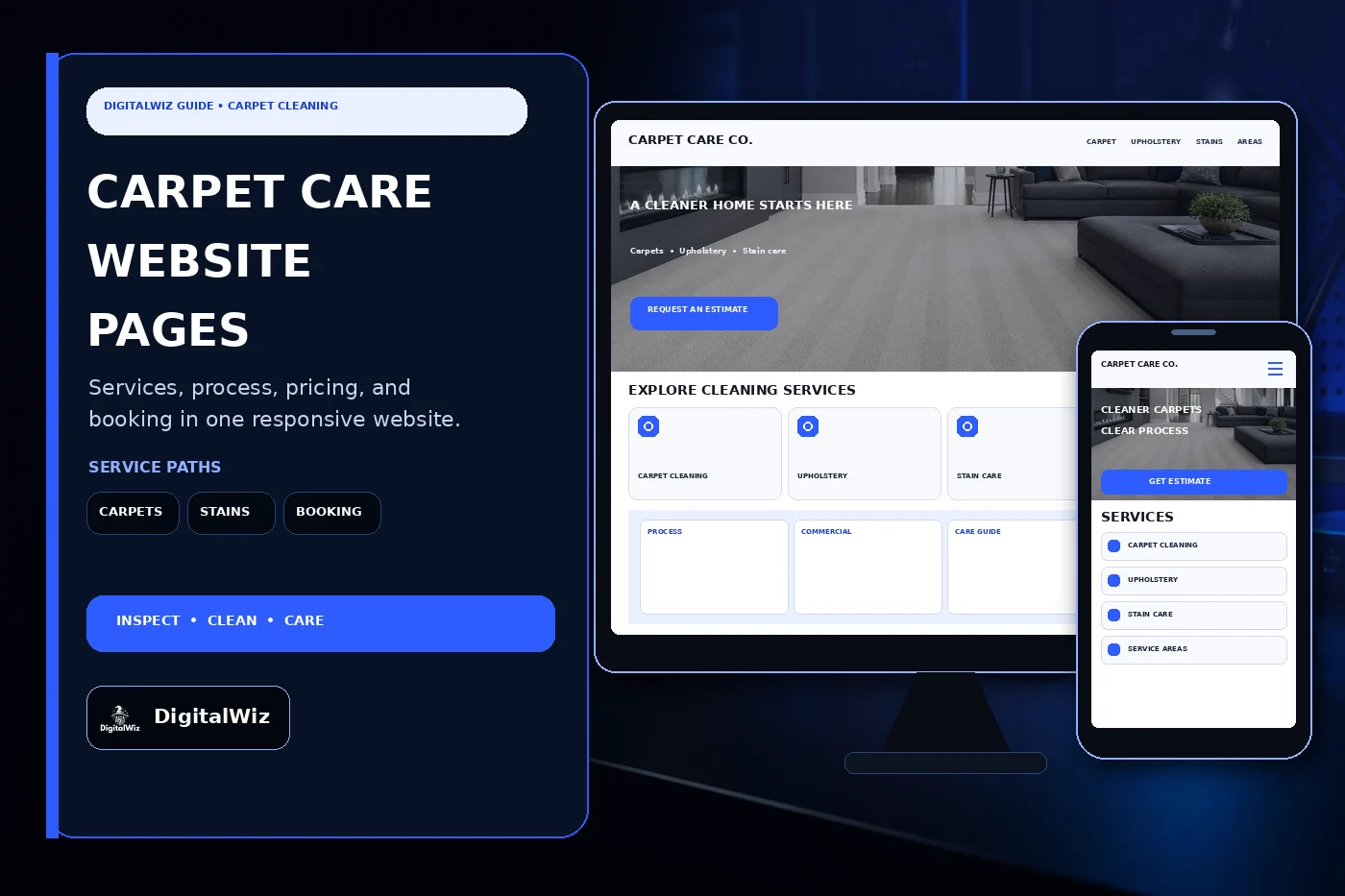
The direct answer
A carpet cleaning company website should have focused pages for residential carpet cleaning, upholstery when offered, stain and odor treatment, pet-related concerns, commercial work, specialty fibers or area rugs within scope, service areas, cleaning methods, preparation and drying, pricing context, credentials, FAQs, and estimate requests. One page called ‘Services’ leaves customers guessing about fabric, room count, stains, access, drying time, and the final price.
Build the site around work the company can inspect, clean, explain, and stand behind. A Charlotte-area owner-operator cleaning occupied homes needs a different path than a crew serving offices, apartments, property managers, restaurants, hotels, or restoration contractors. Upholstery, rugs, hard surfaces, odor work, water extraction, and commercial maintenance should appear only when the team has the training, equipment, products, insurance, and process to perform them responsibly.
Each page should help someone decide whether the service fits before asking for a phone number. Explain the surface or item, common concerns, inspection step, method selection, preparation, access, realistic drying variables, estimate process, and what happens after the visit. That gives the website, Search Visibility, and Paid Ads Management useful landing pages instead of sending every search and ad click to the homepage.
- Create separate pages for residential carpet, upholstery, stains and odors, commercial work, and every specialty service genuinely offered.
- Explain inspection, preparation, cleaning, drying, final review, payment, and aftercare in plain language.
- Publish accurate service limits, credentials, product policies, pricing factors, guarantees, and appointment boundaries.
- Track calls and forms through qualified estimate, scheduled visit, completed job, service mix, territory, value, and lead quality.
Separate carpet, upholstery, specialty, and commercial service pages
The residential carpet page should answer the questions homeowners actually have. Which carpet constructions and fibers does the company evaluate? Are occupied homes, apartments, stairs, hallways, basements, and move-in or move-out jobs supported? How should furniture, toys, breakables, pets, parking, and entry access be handled? The page can discuss common soil, traffic lanes, spills, spots, and odors without promising every mark will disappear.
Upholstery needs its own lane. Sofas, sectionals, dining chairs, mattresses, office seating, natural fibers, synthetics, blends, leather, delicate trims, loose cushions, and manufacturer care labels can require different inspection and cleaning decisions. State which items the company accepts, what information or photos help, when a hidden test may be appropriate, and which fabrics or conditions get referred elsewhere. Carpet experience does not automatically make every textile safe to clean.
Stain, pet, odor, area-rug, hard-surface, and specialty pages belong on the site only when those are real services. Keep stain treatment separate from a removal guarantee. Explain that color loss, fiber damage, prior products, age, heat, contamination, backing, subfloor, padding, dyes, and the source of an odor can change what is possible. If area rugs leave the home for off-site work, describe intake, identification, documentation, transport, cleaning, drying, storage, and return honestly.
Commercial buyers need a dedicated page and form. Offices, retail spaces, apartment communities, places of worship, medical or educational settings, hospitality properties, and property managers may need site walks, certificates of insurance, after-hours access, security procedures, recurring maintenance, spot-response plans, purchase orders, multiple decision-makers, and documented completion. Do not make a facilities manager book through a form designed for three bedrooms and a hallway.
- Residential carpet: supported fibers and spaces, furniture policy, stairs, access, preparation, method, drying, and final review.
- Upholstery: supported fabrics and items, labels, testing, cushions, trims, limitations, drying, and protection options.
- Specialty work: stains, odors, pet concerns, rugs, hard surfaces, protectors, and treatments only when genuinely supported.
- Commercial service: property types, walkthroughs, access, scheduling, maintenance plans, documentation, accounts, and response paths.
Show the inspection, cleaning, drying, and aftercare process
A good process page starts before equipment enters the building. Show the inquiry, service-area check, room or item details, useful photos, preliminary estimate, appointment confirmation, arrival window, walkthrough, fiber and condition review, method selection, furniture and access plan, pre-vacuuming or preparation when included, spot treatment, cleaning, extraction or soil removal, grooming when appropriate, final inspection, payment, and care instructions. Label anything that changes by surface, condition, or property.
Method pages should explain decisions rather than turn equipment names into magic. Hot-water extraction, low-moisture processes, encapsulation, bonnet methods, dry compounds, upholstery methods, and specialty treatments do not fit every textile or building. State which methods the company uses, what drives the choice, what the customer should expect, and where manufacturer guidance or an on-site inspection controls the plan.
Drying claims need room for reality. Fiber, pile, backing, padding, cleaning method, moisture recovery, room temperature, humidity, air movement, ventilation, soil level, treatment volume, furniture placement, and weather can all affect drying. Give a normal communication process instead of one guaranteed hour count. Tell customers when they may walk on the surface, how to protect furniture and flooring, what ventilation guidance applies, and whom to contact if something does not look or feel right.
Preparation and aftercare should be easy to scan on a phone. Identify what the customer moves, what the crew moves, what stays in place, how valuables and electronics are handled, where pets should be secured, what parking or water access may be needed, and whether the home must be occupied. After the job, explain safe traffic, tabs or blocks, ventilation, spot-care limits, protector curing when relevant, and the final review or callback process.
- Map the full customer path from first room details through inspection, method selection, cleaning, drying guidance, and follow-up.
- Explain what is included, optional, condition-dependent, customer-prepared, or outside scope before the appointment.
- Keep method and drying language accurate to the textile, property, weather, equipment, and inspection findings.
- Give customers a short mobile-friendly preparation list and a separate aftercare checklist.
Use credentials, safety guidance, and proof without overclaiming
Cleaning credentials matter because the work touches textiles, dyes, furnishings, indoor spaces, customer property, and sometimes sensitive contamination. Publish the legal business name, real service territory, insurance information available for review, technician training, applicable certifications, and the people or company that hold them. Make verification possible. A badge by itself does not explain who was trained or whether the credential is current.
The Institute of Inspection, Cleaning and Restoration Certification says its IICRC standards are ANSI-accredited guidelines for inspection, cleaning, and restoration work. Its standards list includes ANSI/IICRC S100 for professional cleaning of textile floor coverings and ANSI/IICRC S300 for professional upholstery cleaning. A carpet cleaning company can identify the standards and certifications that genuinely apply to its work without claiming every technician, process, or service is certified when it is not.
Safety content should be direct but narrow. Ask customers to disclose known water damage, mold concerns, pest treatment, bodily fluids, sewage, sharp objects, damaged flooring, loose carpet, fragile furniture, chemical spills, medical sensitivities, or other conditions that change the job. Then explain which situations require another qualified provider or a different assessment. Do not coach people through mixing chemicals, treating unknown contamination, lifting heavy furniture, opening equipment, or handling unsafe materials.
Real project proof beats stock claims. With permission, show the broad property type, textile or room context, initial concern, inspection finding, chosen scope, access challenge, process, and final review. Protect addresses, family photographs, valuables, children, pets, security details, medical information, account records, and identifying interiors. Never invent testimonials, star ratings, stain-removal percentages, drying times, room counts, customer totals, rankings, awards, or before-and-after outcomes.
- Show the legal identity, insurance context, technician qualifications, certifications, and verification paths accurately.
- Attribute every standard, credential, product approval, and professional relationship to the correct person or organization.
- Route contamination, damage, unsafe access, delicate textiles, and out-of-scope work to an appropriate review path.
- Use authorized project examples with private home, customer, property, and security details removed.
Explain pricing and guarantees without bait-and-switch language
Carpet cleaning prices can change with square footage, room size, stairs, hallways, fiber and construction, soil level, spots, odor source, pet treatment, furniture, access, parking, travel, minimum charges, method, protectors, upholstery pieces, commercial scheduling, and the condition found during the walkthrough. A tiny per-room price is not useful when the page hides the room limit or the services added at the door.
The website can still make cost easier to understand. Publish exact prices or ranges only when the assumptions stay current. Define what counts as a room, how oversized or combined spaces are treated, what the minimum includes, whether stairs and hallways are separate, which spot work is included, how furniture and protector options are priced, and when tax or travel applies. If photos or measurements produce only a preliminary estimate, say that before the customer books.
Separate the request, estimate, confirmed appointment, on-site scope, approved change, completed work, and final invoice. Confirmation copy should identify who reviews the details, how the arrival window is set, what may change after inspection, and when the customer approves added work. That is much cleaner than advertising one number and relying on a technician to explain every exception in the living room.
Guarantee language needs the same discipline. A service guarantee can describe the callback window and review process the company truly honors. It should not promise permanent stain removal, complete odor elimination, zero resoiling, exact drying, restored color, allergy relief, sanitation, disinfection, or like-new carpet unless the claim is specific, documented, and supportable for that job. Put exclusions and customer responsibilities beside the promise—not three clicks away.
- Explain room, area, fiber, condition, stairs, furniture, treatment, access, travel, minimum, and commercial scheduling cost drivers.
- Publish prices or ranges with current assumptions, inclusions, exclusions, expiration, and changed-scope rules.
- Distinguish online estimates, confirmed appointments, on-site findings, customer-approved additions, and final invoices.
- Write callback and guarantee terms around the real service process, not universal stain, odor, drying, health, or appearance promises.
Build local estimate paths and track the jobs that qualify
Service-area pages should reflect where crews actually work and which services travel there. Residential routes, commercial maintenance, emergency water-related calls, area-rug pickup, high-rise access, gated communities, and after-hours work may have different territories or lead times. Charlotte, Matthews, Mint Hill, Indian Trail, Monroe, Huntersville, and nearby communities can bring different drive times, parking, building rules, and scheduling realities. Do not clone one thin paragraph across every city.
The estimate form should collect enough context without becoming a carpet exam. Ask for name, phone, email, service address or ZIP code, residential or commercial property, requested service, number and approximate size of rooms or items, stairs, known fiber or care label when available, spots or odor concerns, pets, furniture needs, access or parking notes, preferred timing, and safe optional photos. Mark uncertain details as optional. Never ask customers to upload private documents, people, security information, or graphic contamination photos through an ordinary marketing form.
Route inquiries where the workflow changes. A routine occupied-home cleaning, move-out job, pet-odor concern, delicate upholstery item, off-site rug, office maintenance plan, apartment turnover, water-damage concern, unsafe contamination, unsupported textile, warranty callback, and out-of-area request should not enter one queue. The response should explain the next review step without promising price, stain removal, method, arrival, drying, or completion before the details are checked.
Then track what becomes real work. Record source, campaign, landing page, property type, service, territory, room or item mix, qualified status, estimate, scheduled visit, completed job, final value, repeat service, cancellation, and lead quality when the operation supports it. That shows whether service pages attract profitable jobs or broad ads keep producing unsupported textiles and distant addresses. Want a practical review of your pages, local visibility, estimate flow, and lead tracking? Run a free BizScore audit.
- Separate residential, commercial, specialty, pickup, callback, unsafe-condition, and out-of-area requests.
- Ask for service, property, room or item, condition, access, location, timing, and safe optional photo context.
- Track source and landing page through qualification, estimate, schedule, completion, service mix, value, and lead quality.
- Use the findings to improve pages, ads, territory, intake, scheduling, technician handoffs, follow-up, and repeat-service reminders.